Marketing Archive
An archive of Convoke’s earlier marketing pages, preserved for reference. Jump to a section:
Audience
Product
Deep Dives
For Game Masters
Run more campaigns. Prep less. Forget less.
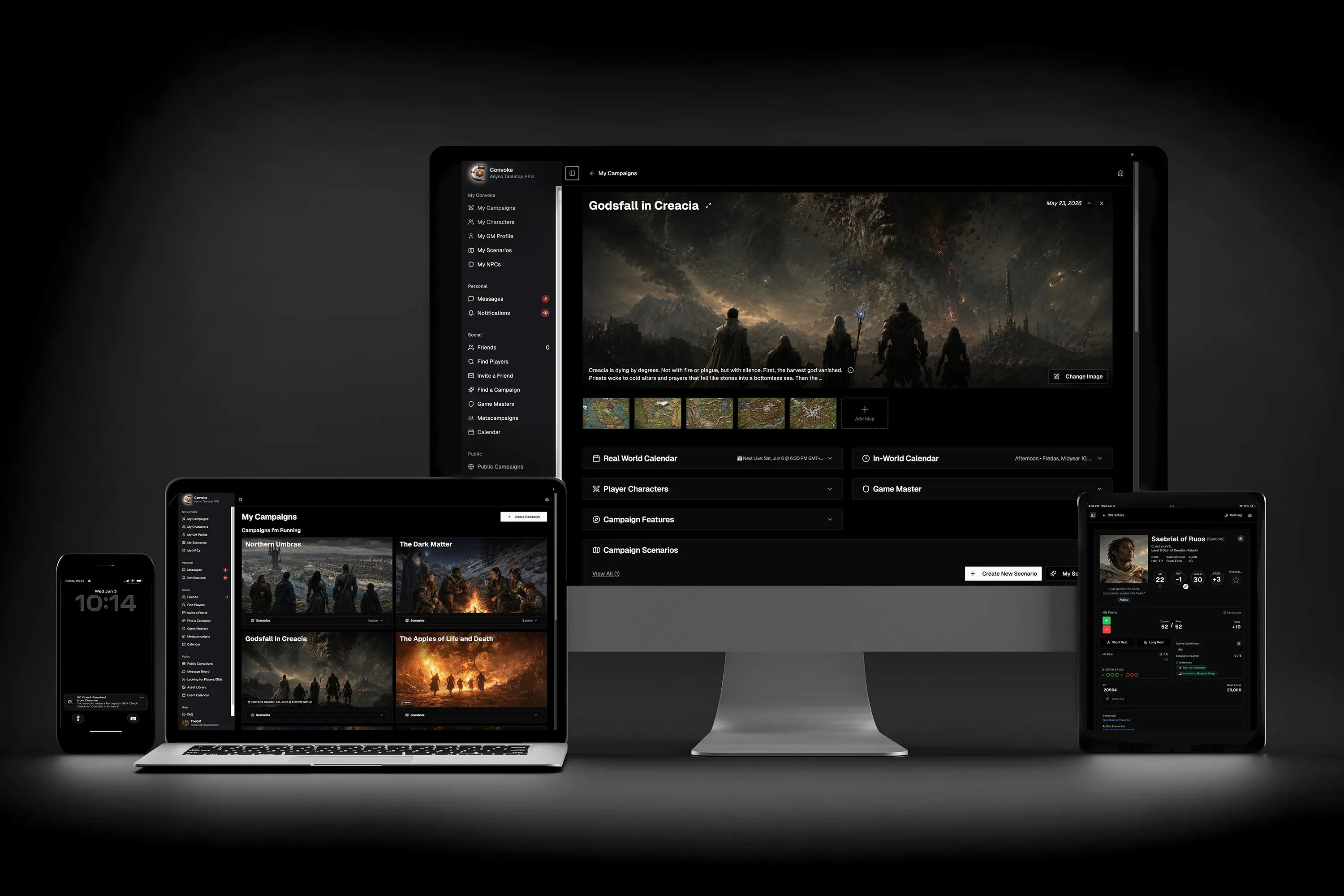
Convoke gives Game Masters the tools that used to live in seven browser tabs and a Google Doc — Scribe summaries, an NPC library, a living lore wiki, scenario templates, and async session coordination. So the work you do once stays done.
No credit card. 5e today, more systems coming.
The problem
You have three campaigns you would love to run and time for maybe one.
The session you ran last month is already fading. The NPC you spent an hour designing for that one-shot is trapped in a Word doc you can not find. Scheduling six adults takes longer than the session itself.
Convoke is built around a single idea: the prep you do should compound, not evaporate.
What you get
The tools that make GMing sustainable.
Campaign Scribe — session recaps that write themselves
After every session, Scribe reads the chat and drafts a recap. You edit, you publish. Players who missed a week catch up in two minutes.
- AI drafts, you edit — your voice stays yours
- Tags key events, NPCs, and locations automatically
- Optional. Turn it off and the platform works fine without it.
An NPC library that travels with you
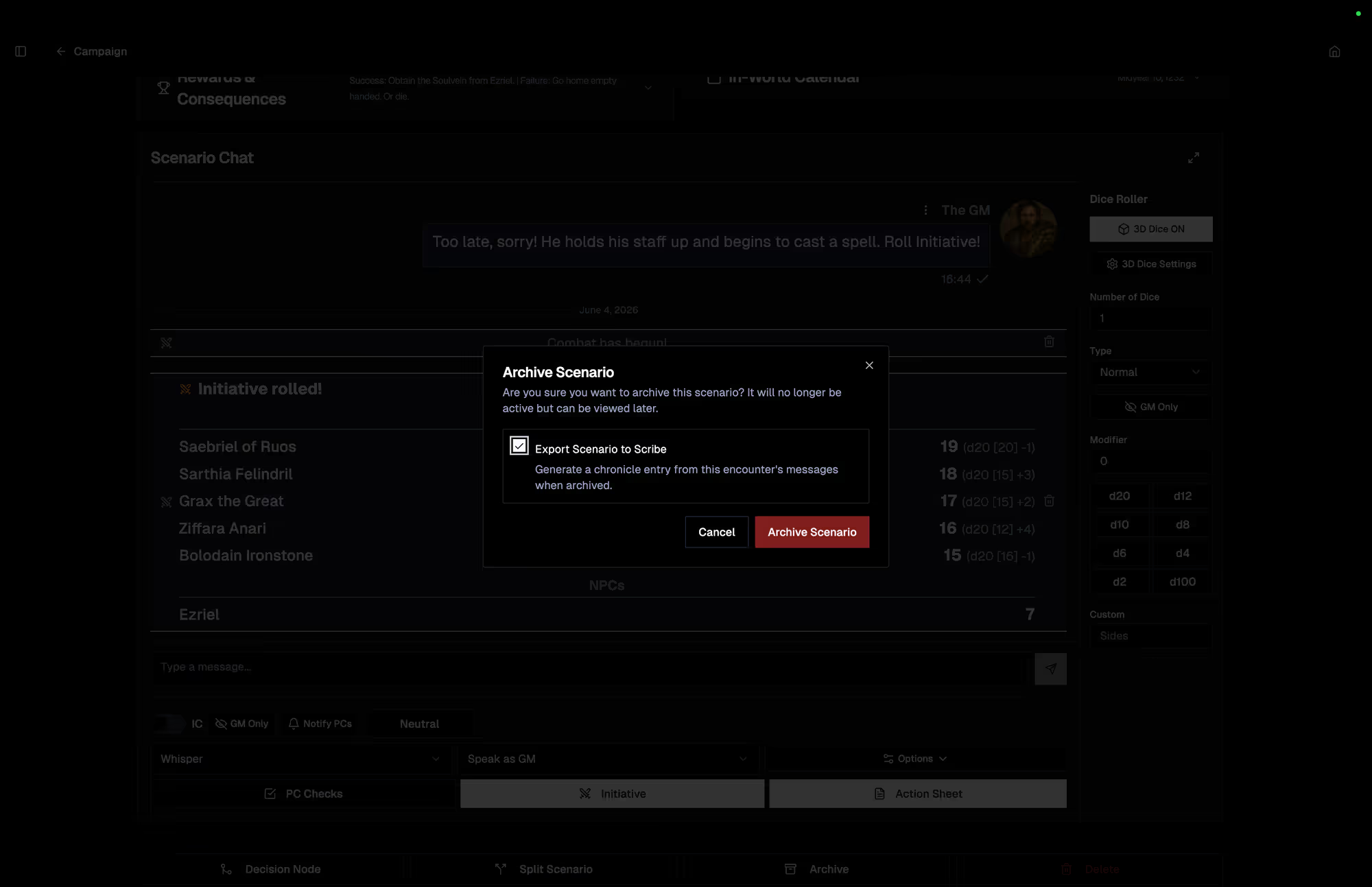
Build an NPC once — name, voice, motivation, stat block. Drop them into any campaign. Share with friends. Spin up a campaign-specific copy when the party finally meets them.
Lore wiki with player-knowledge tracking
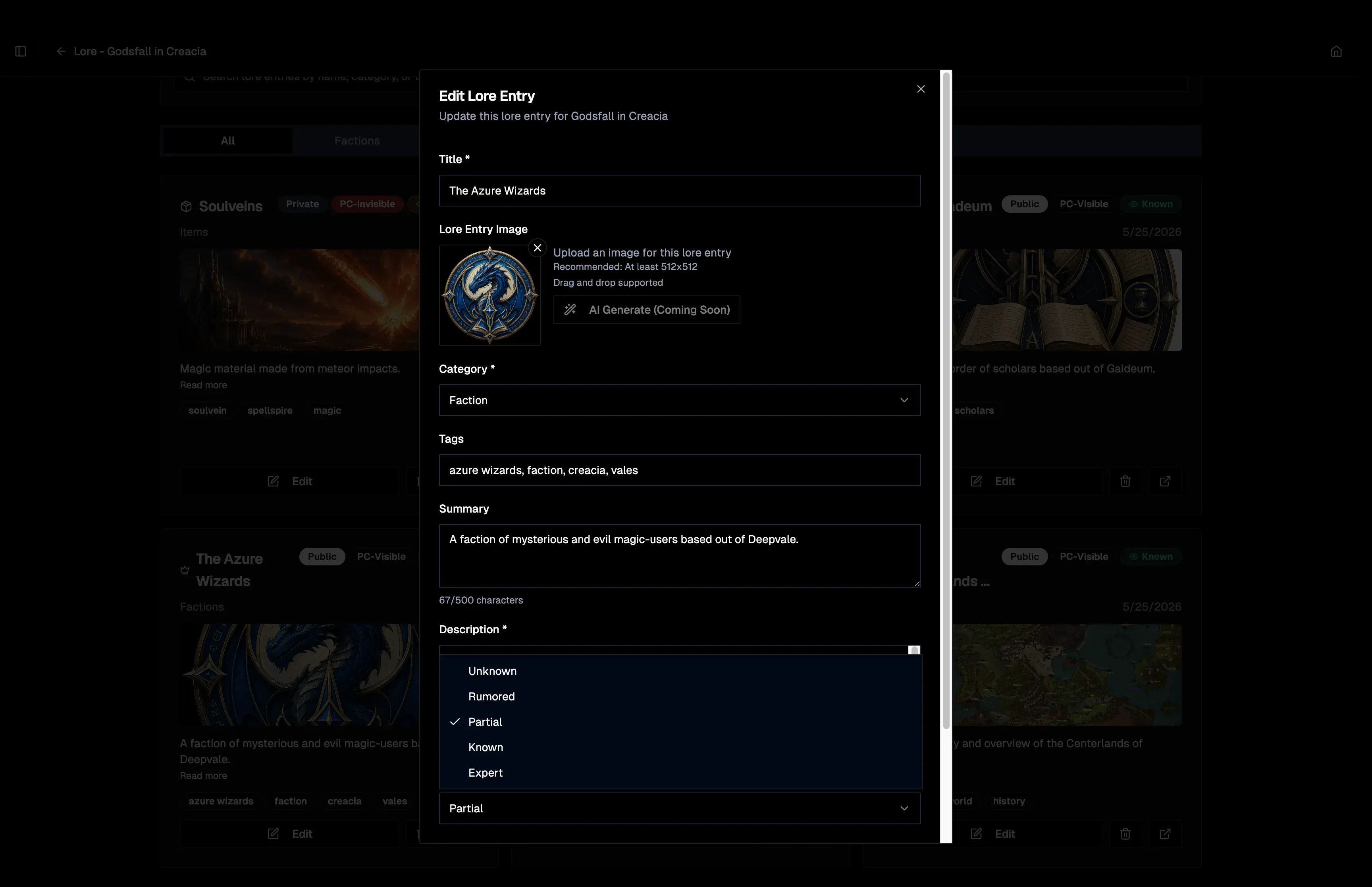
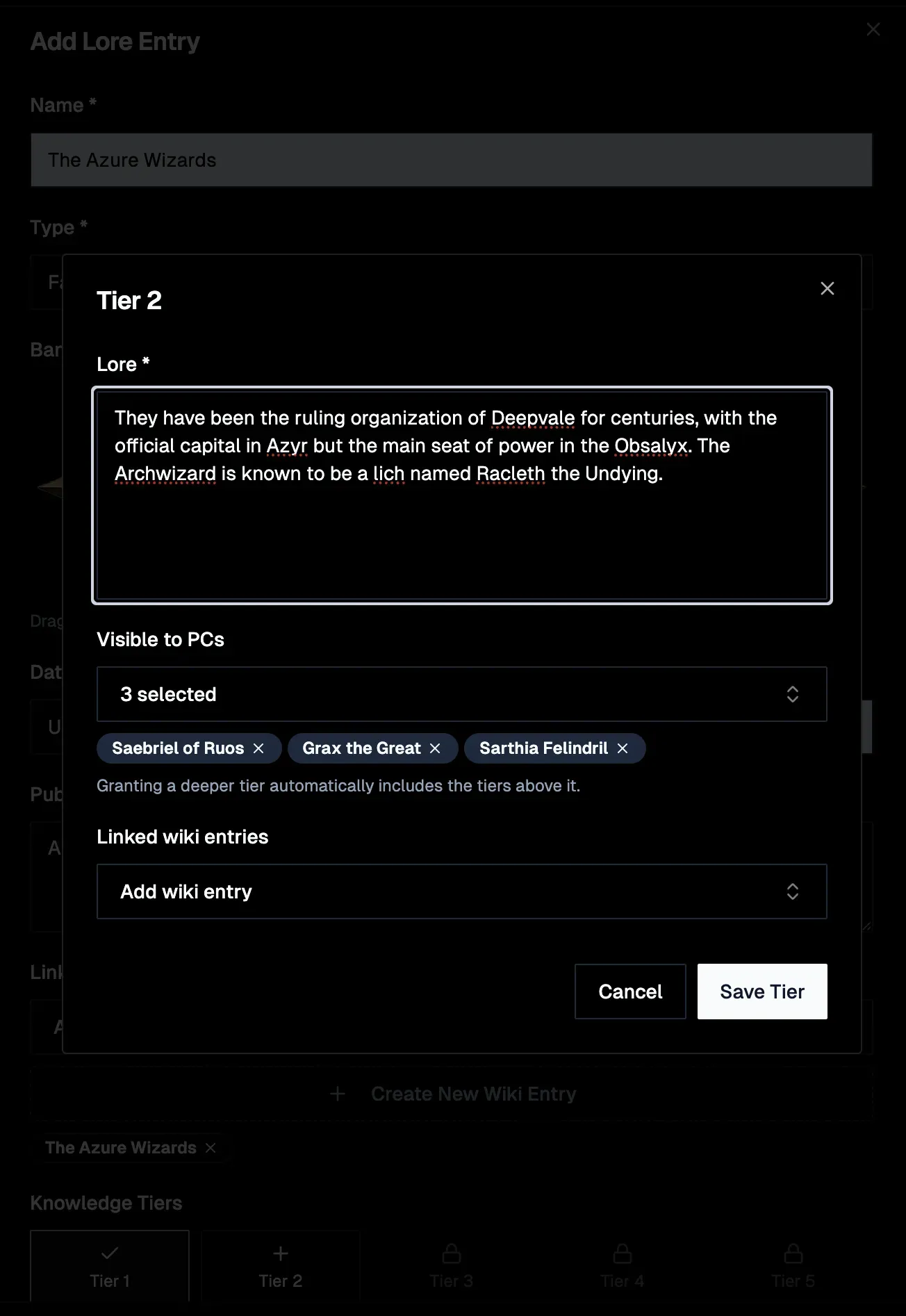
Every entry has a knowledge state per player: Unknown, Rumored, Partial, Known, Expert. When a player clicks a name, they see only what their character would know.
- 10 lore categories: Location, NPC, History, Organization, Religion, Culture, Magic, Item, Event, Law
Scenario templates
Save a one-shot, a heist, a dungeon, a courtroom drama as a template. Spin up an instance for a new party. The skeleton stays — the players make it different every time.
Blast the Horn — async session coordination
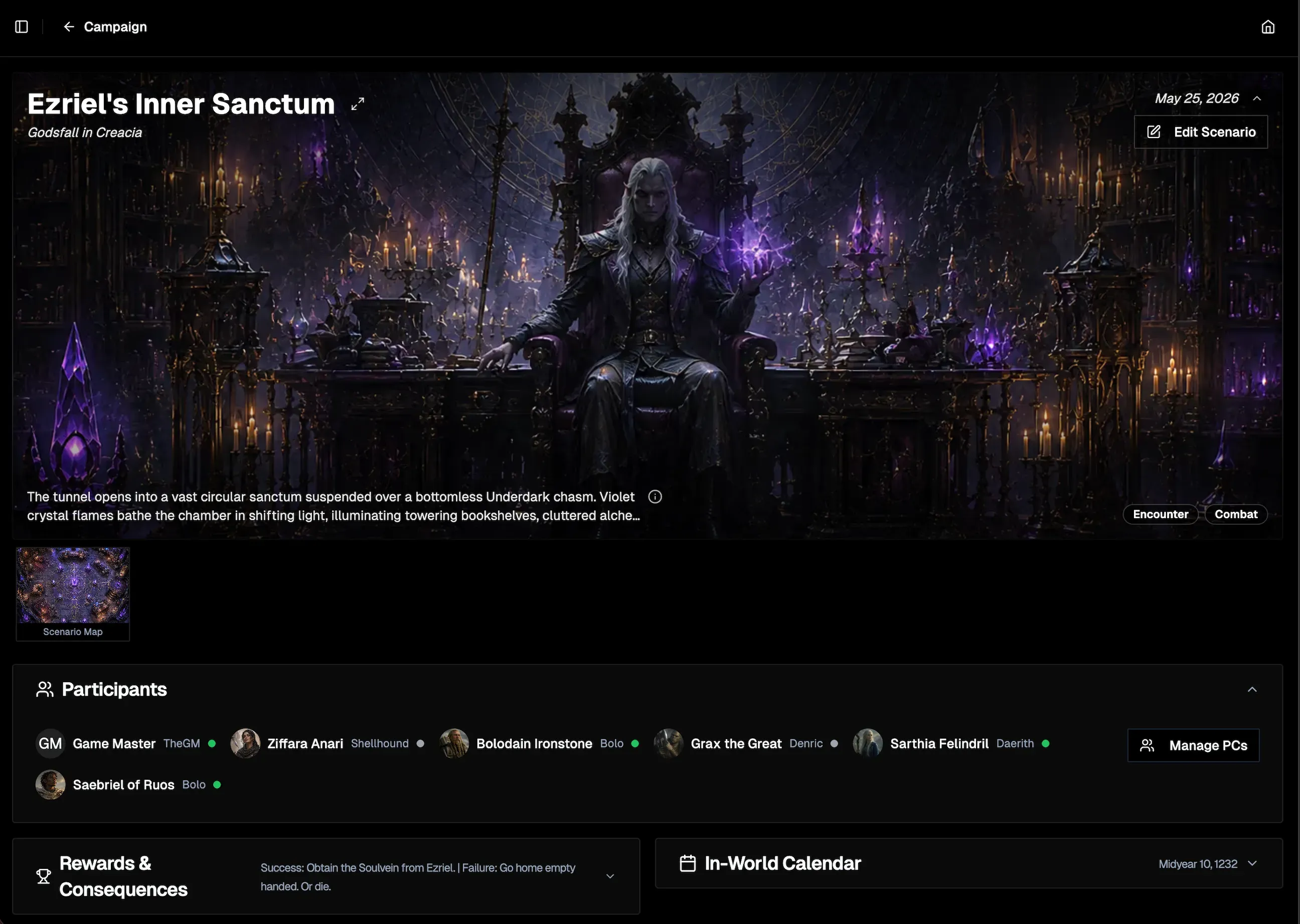
Propose a session. Players vote. Hit your minimum-player threshold and it confirms automatically. Timezone-aware. No more "does next Thursday work" threads.
Two calendars, one campaign
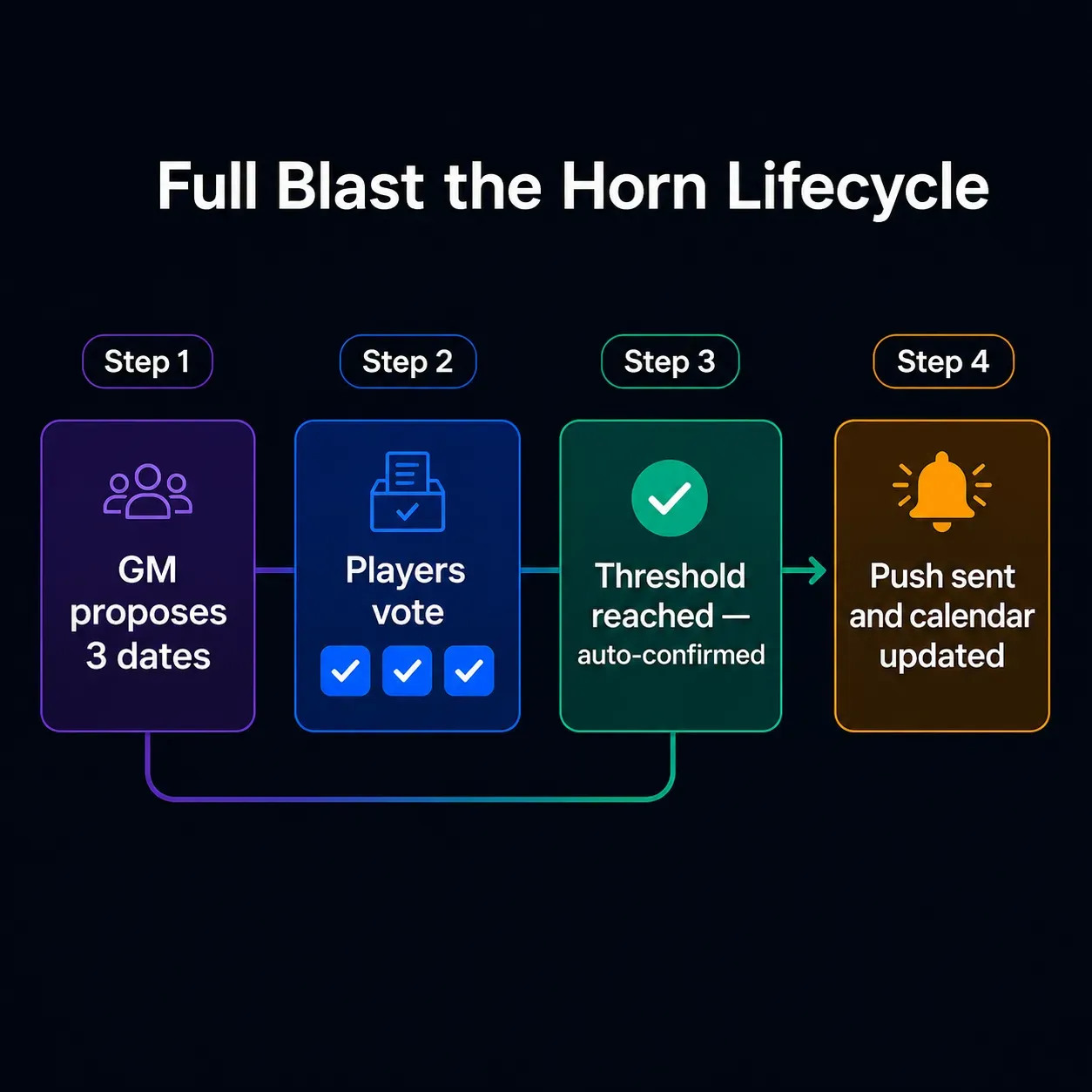
Real-world session calendar for scheduling. In-world calendar for festivals, downtime, travel, recurring events. Players can see what their characters are missing in the world.
Combat and initiative without the spreadsheet
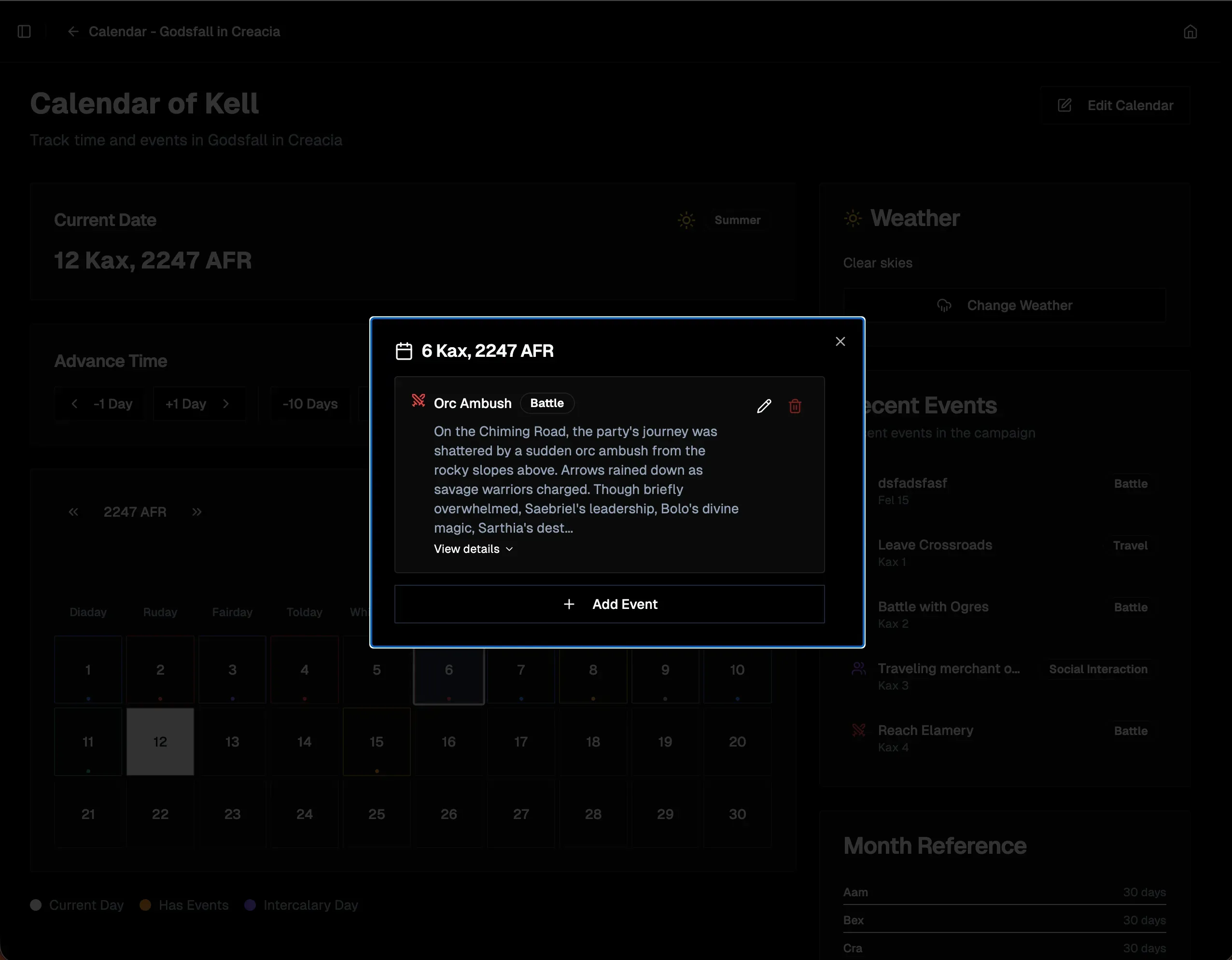
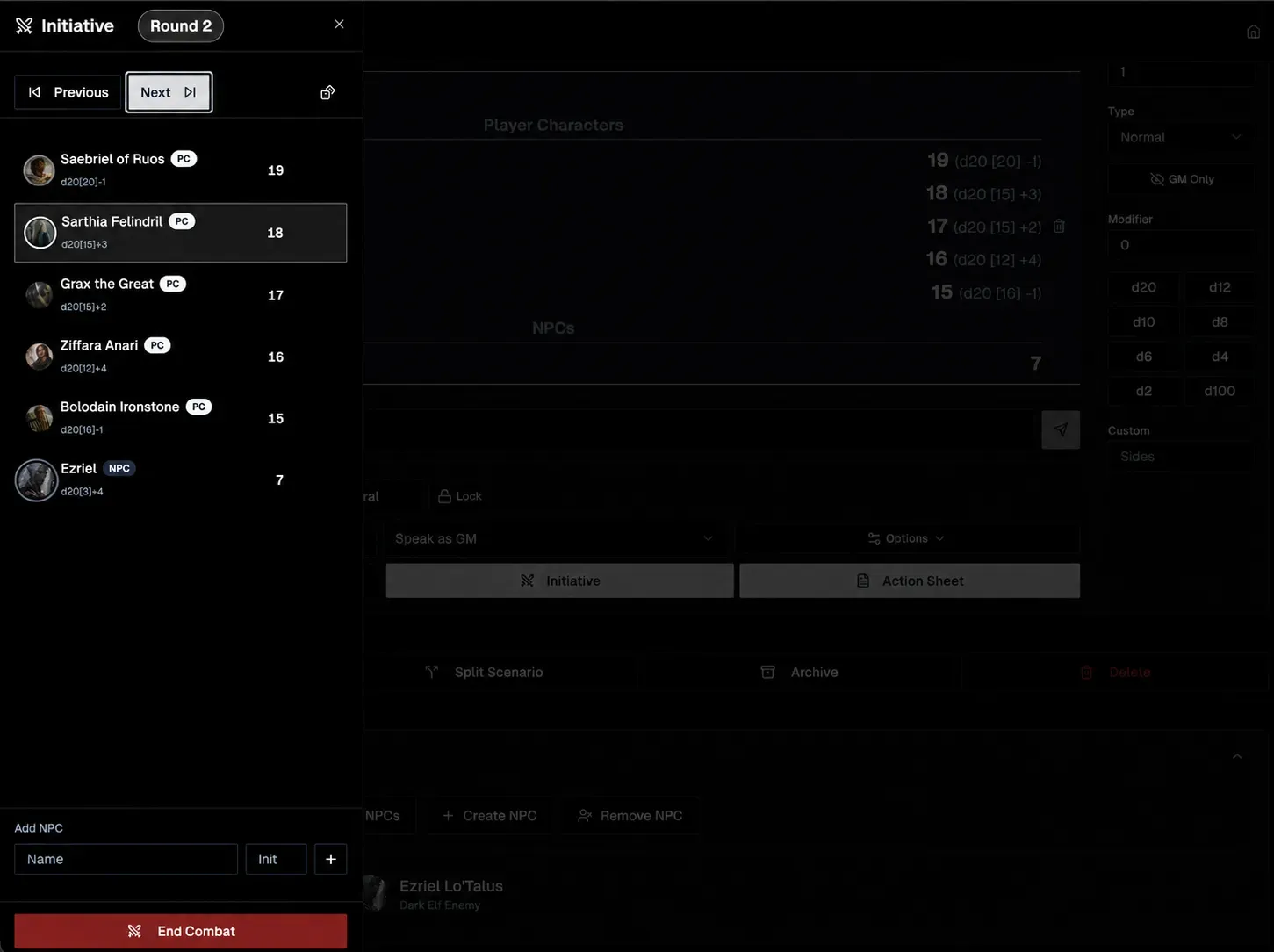
Initiative tracker, round counter, NPC HP, conditions, dice rolls — all inline. Works for play-by-post, virtual tabletop, and in-person sessions.
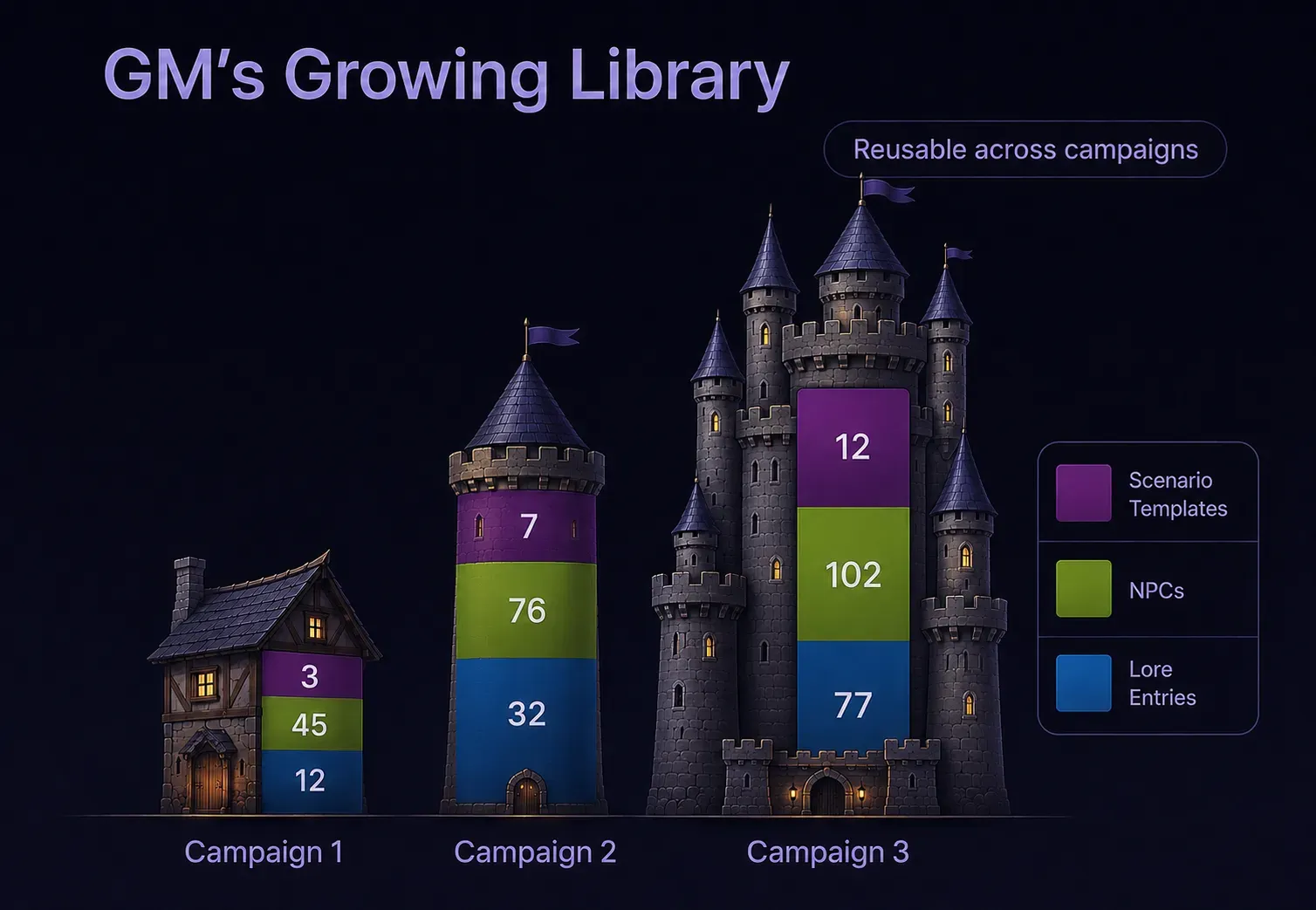
The work compounds
Every NPC, lore entry, scenario, and recap is a brick in your library. After your second campaign, you are running on infrastructure. After your fifth, you are unstoppable.
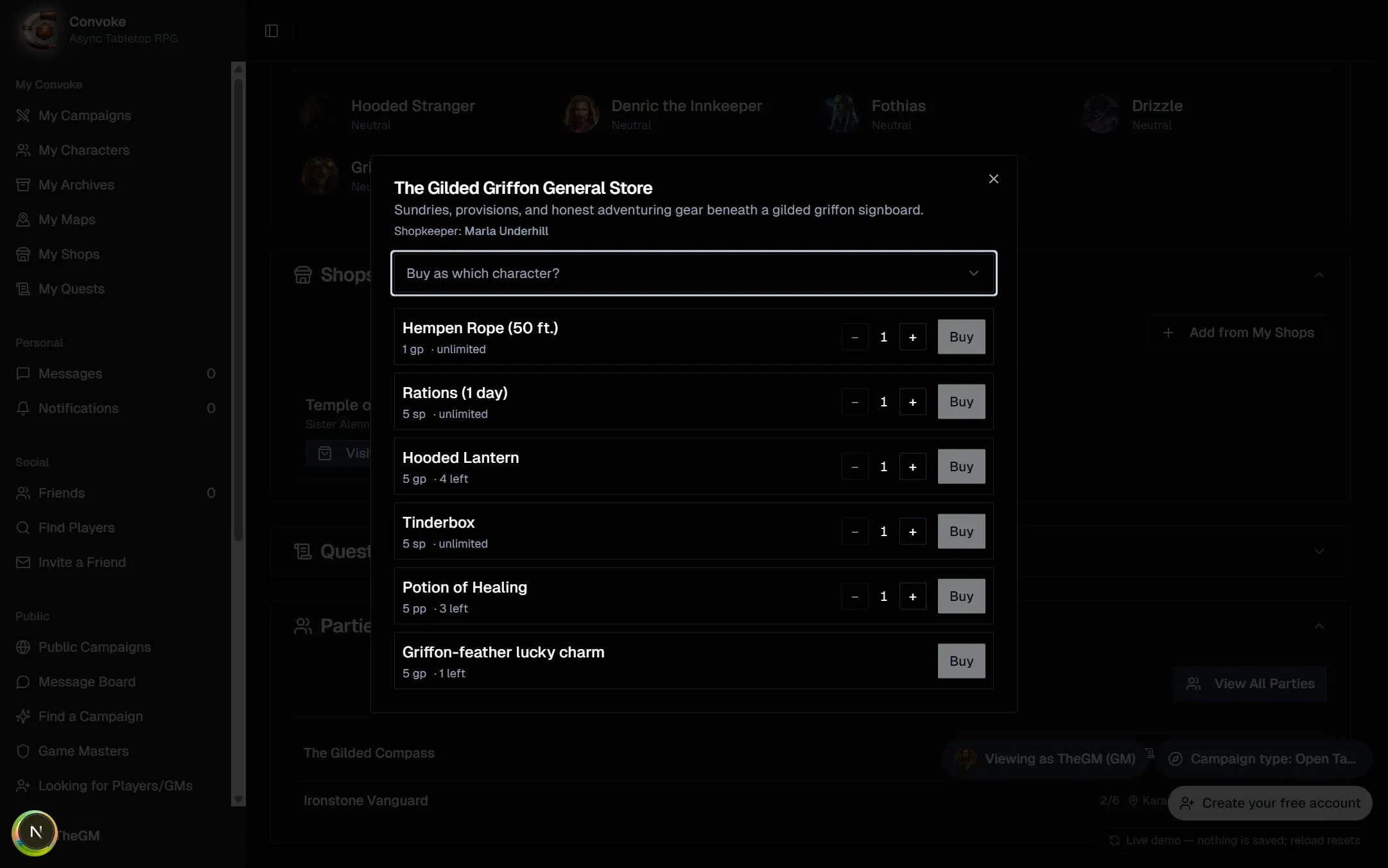
Stock a shop your players can actually spend in
Curate an in-world shop and stock it with real items — a general store, an armorer, an alchemist, even a temple that sells spellcasting services or a stable of mounts. Build it from templates or item by item, set the prices, and players browse and buy in a tap. Convoke checks their coin, does the math, and drops the item into their inventory.
- Curate shop inventories from templates or item by item
- Instant, server-checked purchases with automatic coin math
- Temple spellcasting services and mounts, not just gear
- Every sale written to a ledger — you are notified on each one
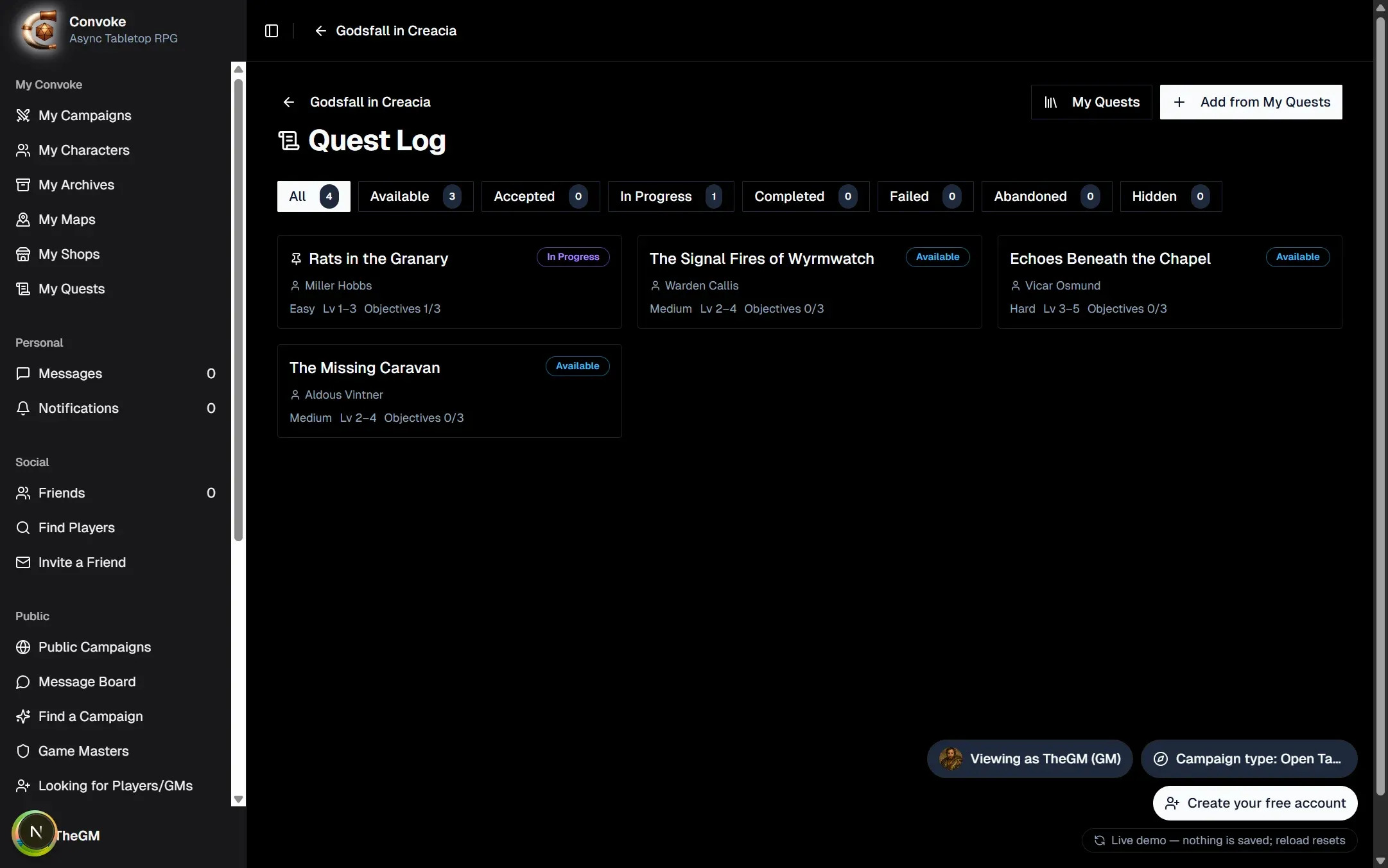
Post a quest board that runs itself
Write a quest — hook, objectives, reward — and post it to the party's board. Assign it to a party, or let them self-accept from the job board. As objectives are checked off, the reward pays out on its own: XP, coin, and any item rewards land straight in your players' inventories. Players can pitch their own quests, too.
- GM and player quest authoring, from a dozen archetypes
- A self-accept job board, or assign a quest to a party
- Objective checklists the party ticks off together
- Automatic XP, coin, and item payouts on completion
Run a whole world, not just a table
World Table campaigns are massive-multiplayer, persistent West Marches worlds — dozens of players sharing one living world, forming their own parties, and getting dispatched on quests. Bring on co-GMs with full, equal control so no single person has to carry it. When a party cannot agree on what is next, they hold a ranked-choice vote and the winning quest is dispatched to them automatically.
- One persistent world, many parties, dozens of players
- Co-GMs with full, equal control — author content and manage members
- Player-formed parties, each with a party channel you can always read
- Ranked-choice quest votes that dispatch the winning party
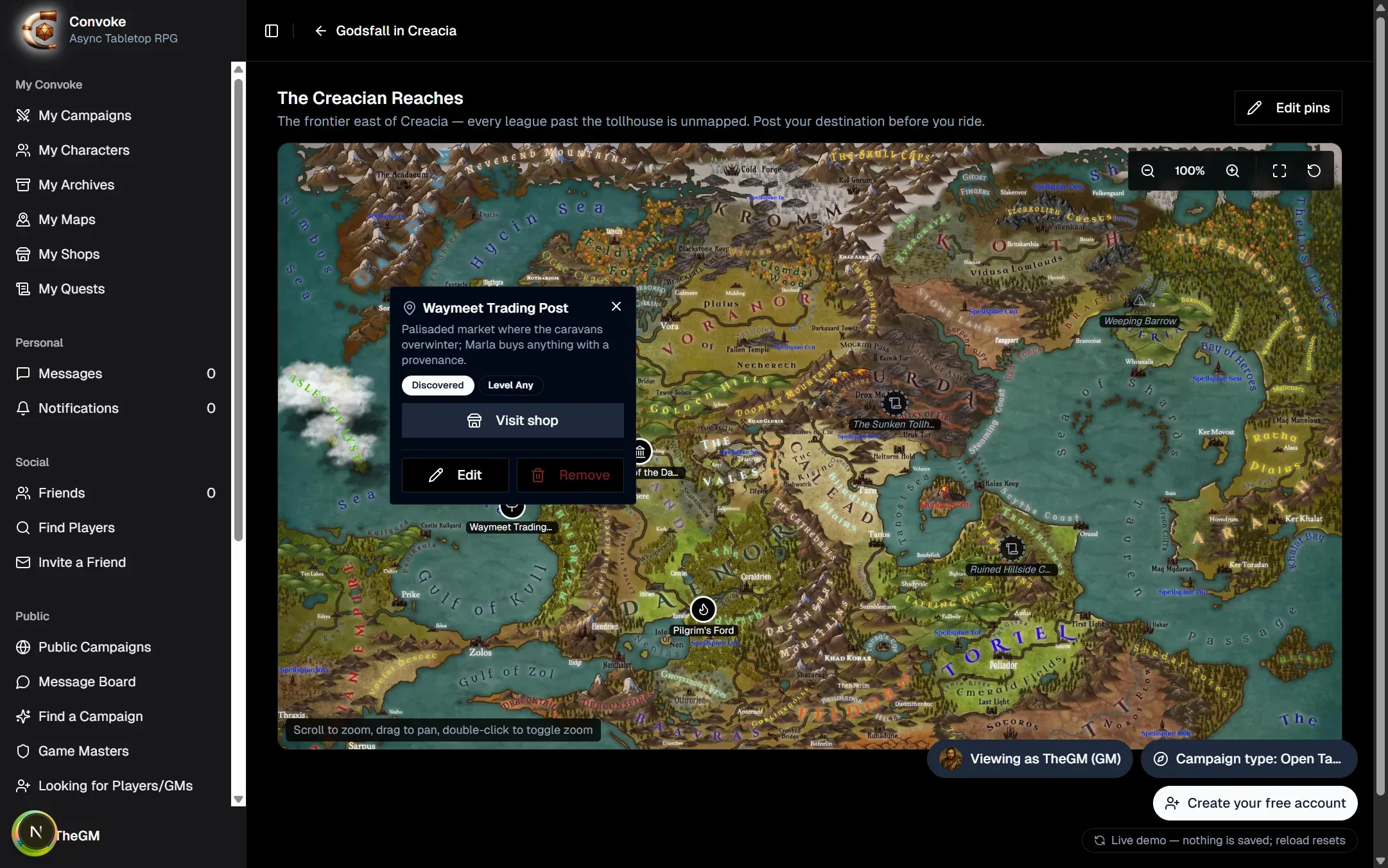
Get paid to run your best games
Any GM who completes payout onboarding can host paid sessions. Set your own per-seat price in your local currency, and Convoke charges players when they book. The platform holds the funds and releases them to you after the session runs — minus a low platform fee. Cancel before your cutoff and players are refunded automatically.
- Set your own per-seat price, in your local currency
- Players are charged at booking — a booked seat is a paid seat
- Funds released to you after the session completes
- A low platform fee, no subscription tier required
Go deeper on the newest tools
World Table Worlds
Run a persistent, massive-multiplayer West Marches world with co-GMs, player-formed parties, a living overworld map, and ranked-choice quest votes.
In-World Economy
Curated shops with instant, server-checked purchases and quest boards that pay out XP, coin, and loot automatically.
Paid Sessions
Host paid games, set your own per-seat price, and get paid after the session runs — for a low platform fee.
What you will not find here.
- A VTT trying to be a CRM
- AI writing your campaign for you
- A subscription billed three days into your free trial
- A platform that requires every player to install the same software
Honest positioning
Where we are today.
- 5e first. Class features, rest types, and trackers are tuned to D&D 5e today. Pathfinder 2e and a generic system are next.
- Async-first, hybrid-capable. Convoke is best between and around sessions.
- Open beta. Free. We are still adding features. Things will change.
Start a campaign — free in open beta.
No credit card. Bring your party or find one in our LFG board.
For Players
Stay in the story between sessions.
Convoke is the asynchronous tabletop platform that lets you play in five-minute moments — a turn over coffee, a whisper at lunch, an inventory check on the train. Your character keeps living, even when your group can not sit down together.
No credit card. 5e today, more systems coming.
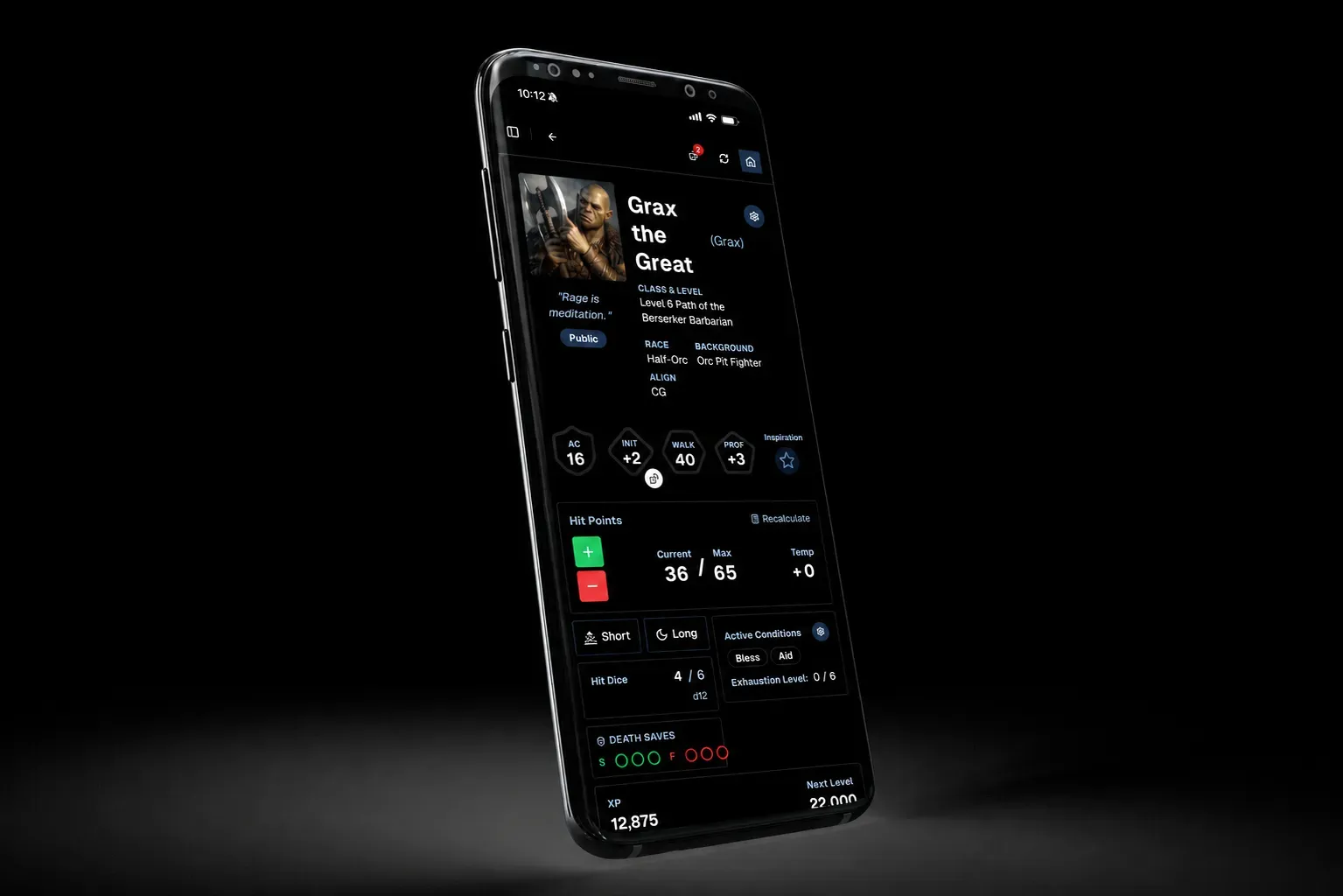
What it actually feels like.
You wake up and your phone buzzes. The party has reached the gates of the city while you slept. You open Convoke, see the GM's scene, post your character's reaction in two paragraphs, roll a Persuasion check inline, and lock your phone. By lunch the conversation has moved on — and your contribution is part of it.
That is the whole pitch. Roleplay that fits between life's other obligations.
Why players love it
The reasons to stay in the story.
Smart 5e character sheets
Spell slots, Channel Divinity, Action Surge, Lay on Hands, Bardic Inspiration — Convoke knows your class features and tracks them for you. Take a long rest? Resources recover automatically.
- 13 classes, 122+ feature trackers
- 4 rest types with automatic recovery
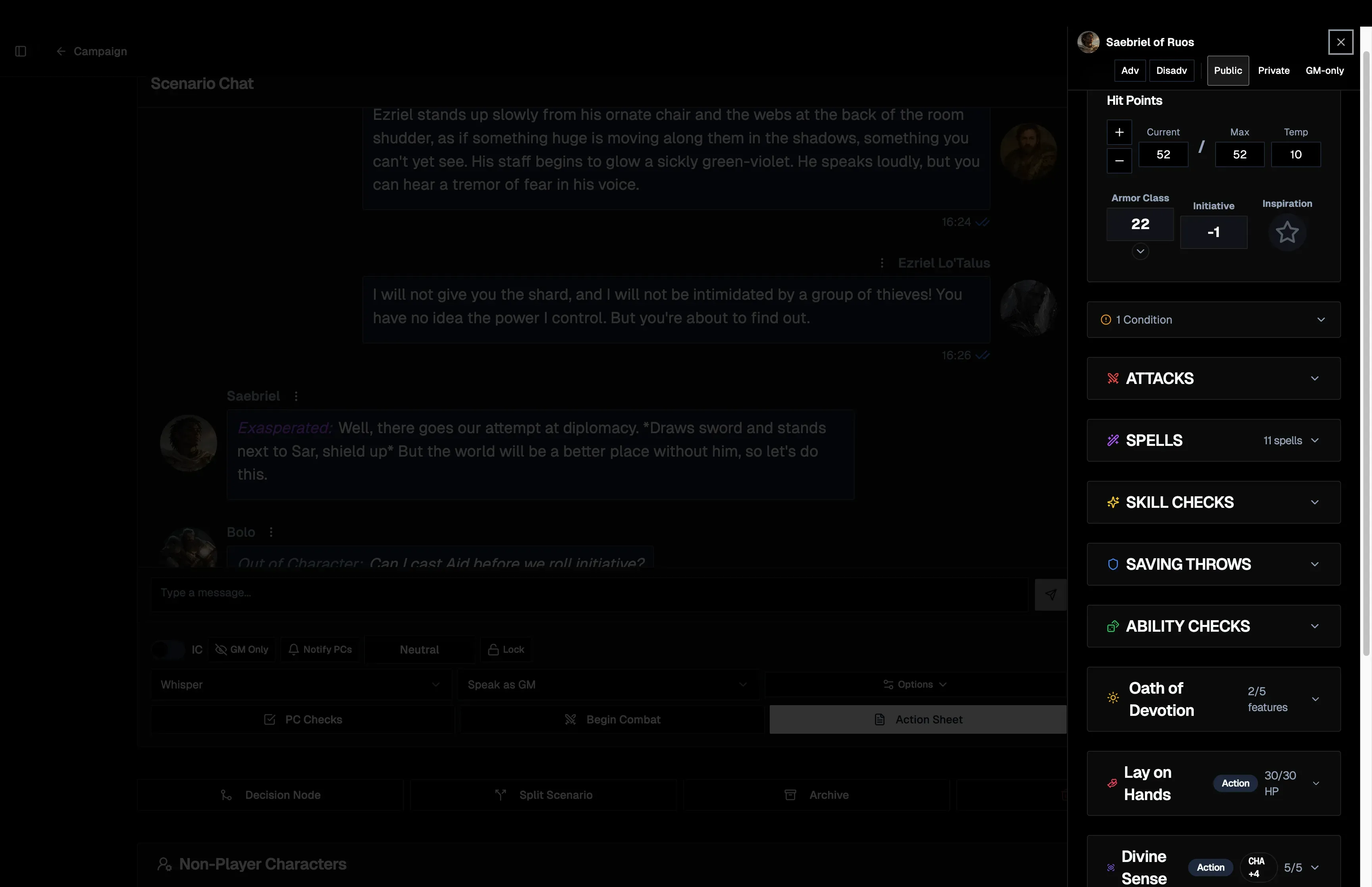
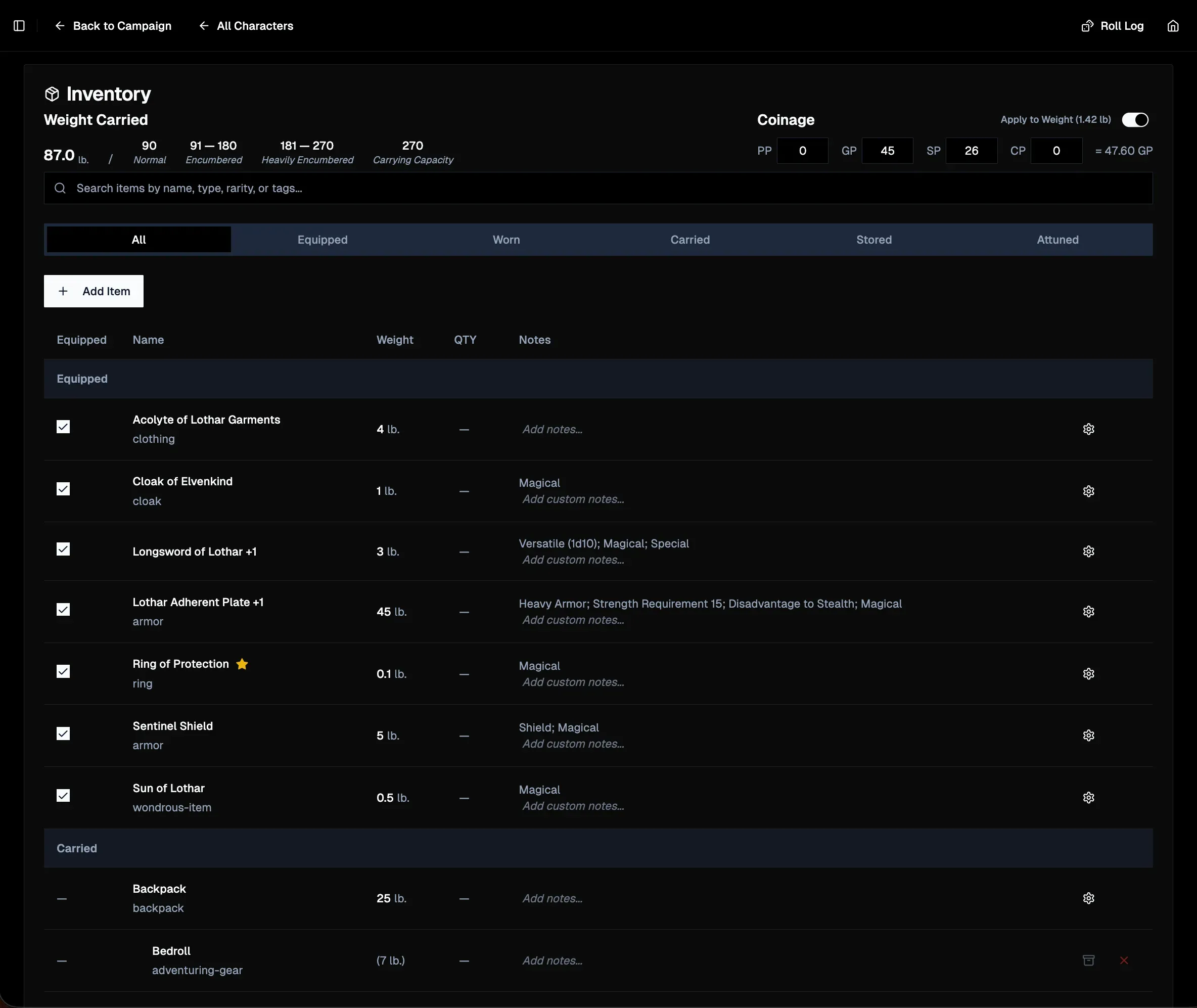
Inventory that just works
Equipment, consumables, tools, vehicles, containers. Weight tracked. Items linked to lore entries. No more "wait, did I have rope?"
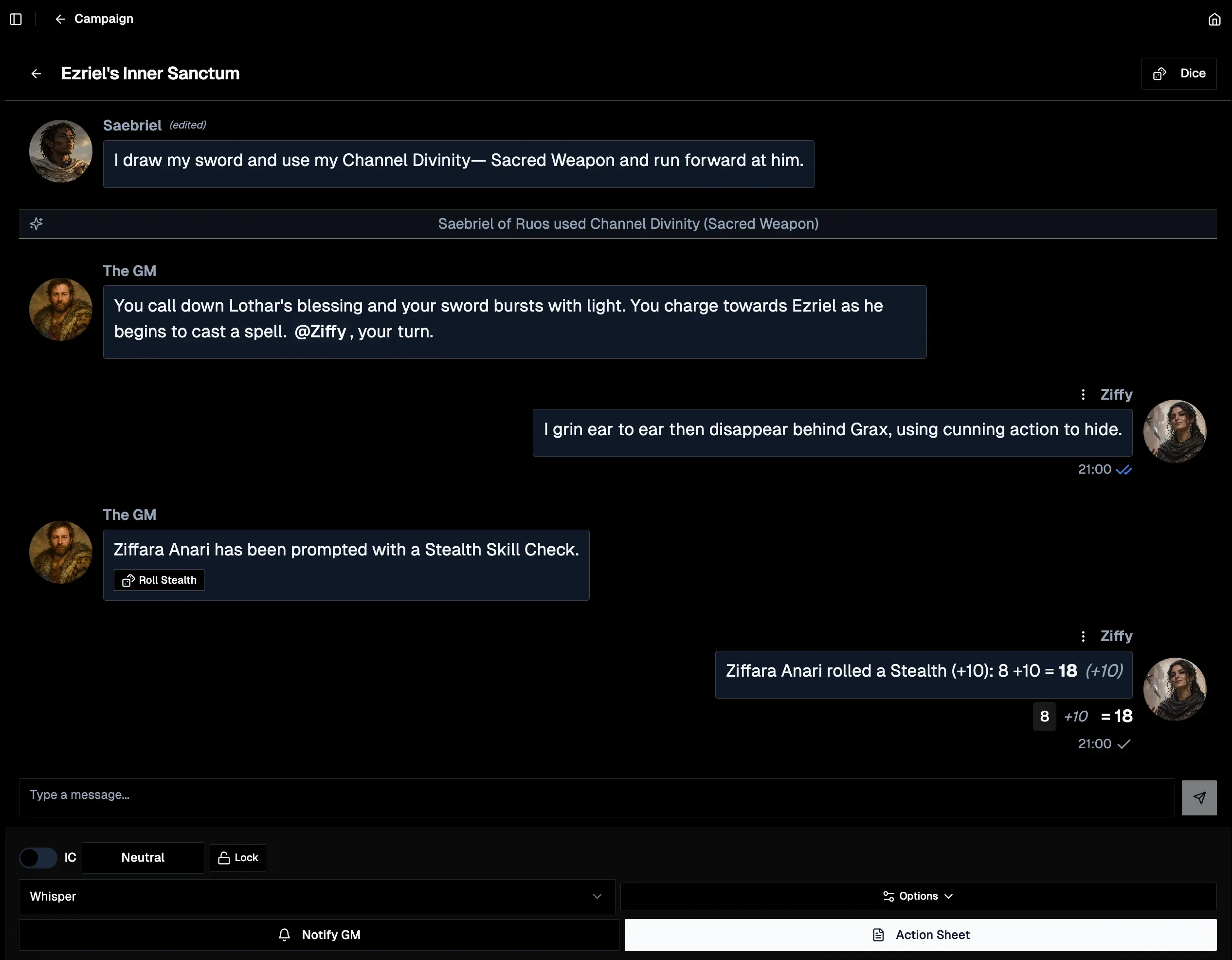
A chat that sounds like a table
In-character and out-of-character toggle, whispers, inline dice rolls, tone tags, and threaded conversations for parallel scenes.
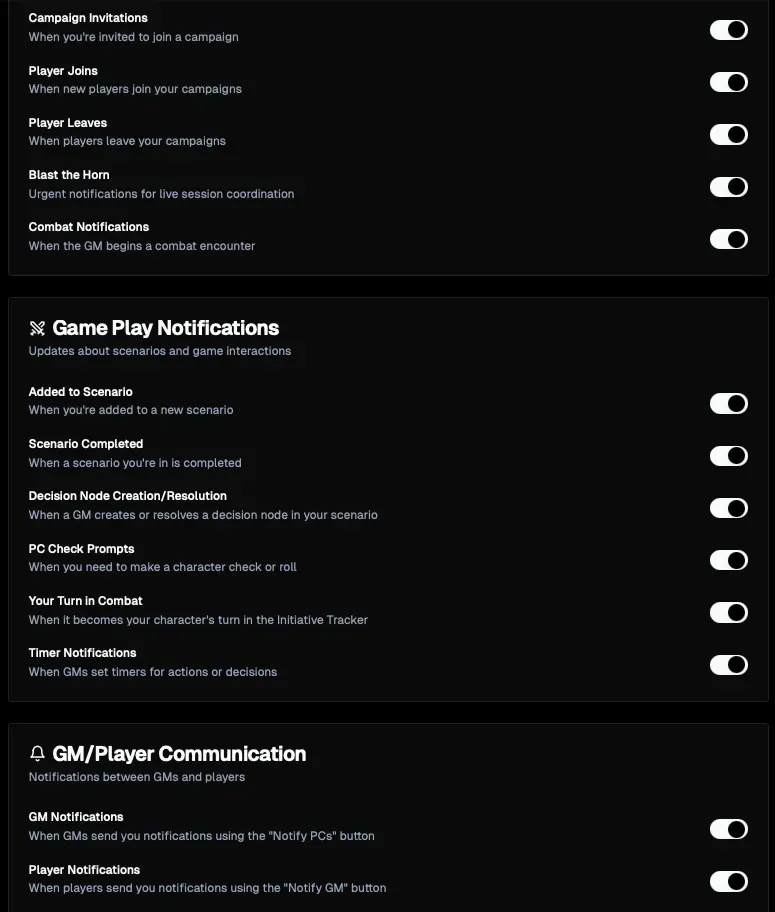
Push notifications that respect you
Get pinged when it is your turn, when the GM posts, when the party needs you. Mute conversations you do not need. The app waits for you — it does not nag.
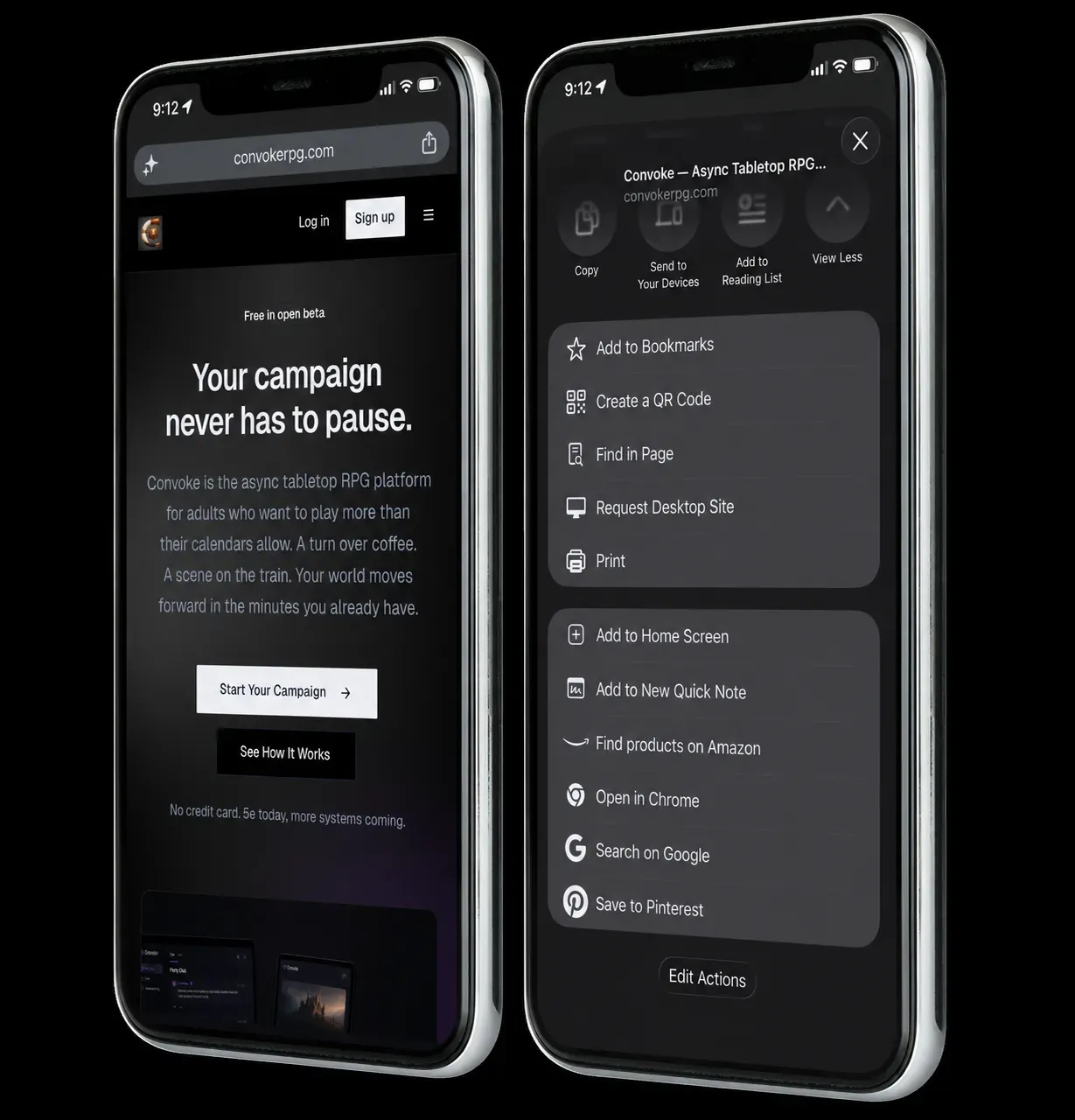
Install it like a real app
Convoke is a Progressive Web App. Add it to your home screen on iOS or Android. Works offline for reading. Syncs in the background.
Lore at your fingertips
Click any NPC or location in chat — Convoke shows you exactly what your character knows. No spoilers, no scrolling through the GM's notes folder.
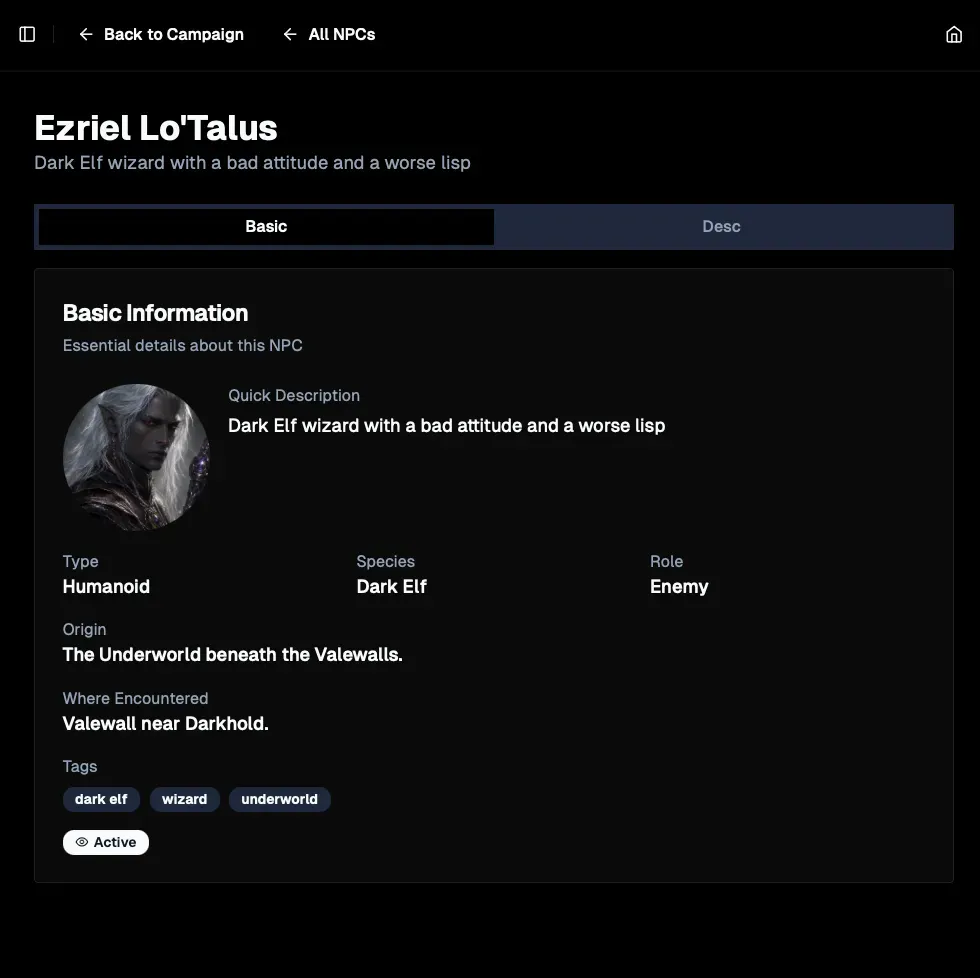
Buy gear from in-world shops
Your GM stocks shops right inside the campaign — a general store, an armorer, an alchemist, a temple that sells spellcasting. Browse the stock, tap Buy, and it is done: Convoke checks your coin, does the math, and drops the item straight into your inventory.
- One-tap buying with the coin math handled for you
- Gear, potions, mounts, and temple services
- Purchases land in your inventory instantly
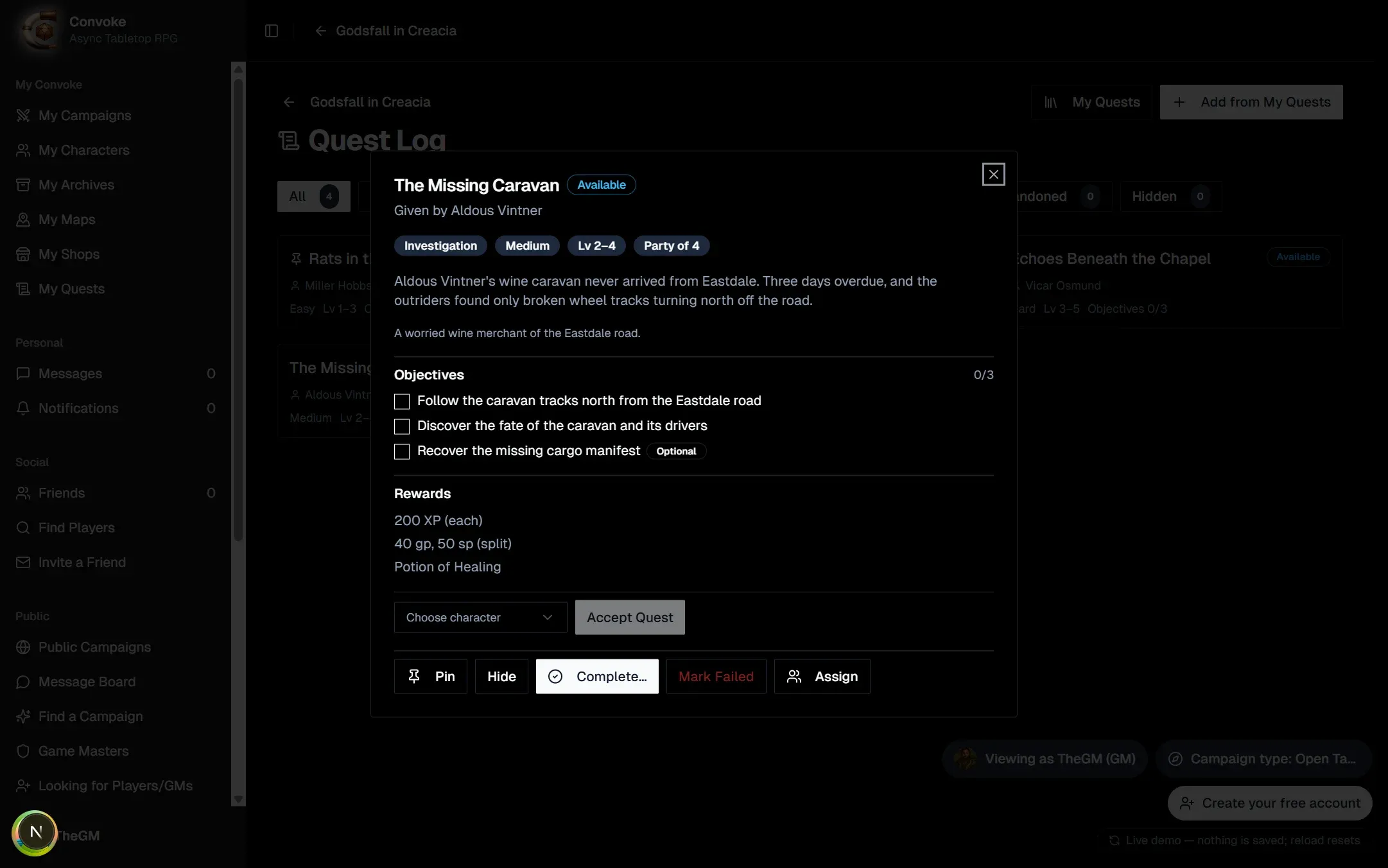
Take on quests from the board
Your party's quest board lists jobs with objectives and rewards. Accept one from the board or take an assignment, tick off objectives as you go, and when the job is done the reward pays out on its own — XP, coin, and any loot land automatically. You can even pitch your own quests.
- Self-accept quests from the board, or take an assignment
- Shared objective checklists your whole party can see
- Rewards — XP, coin, and loot — pay out automatically
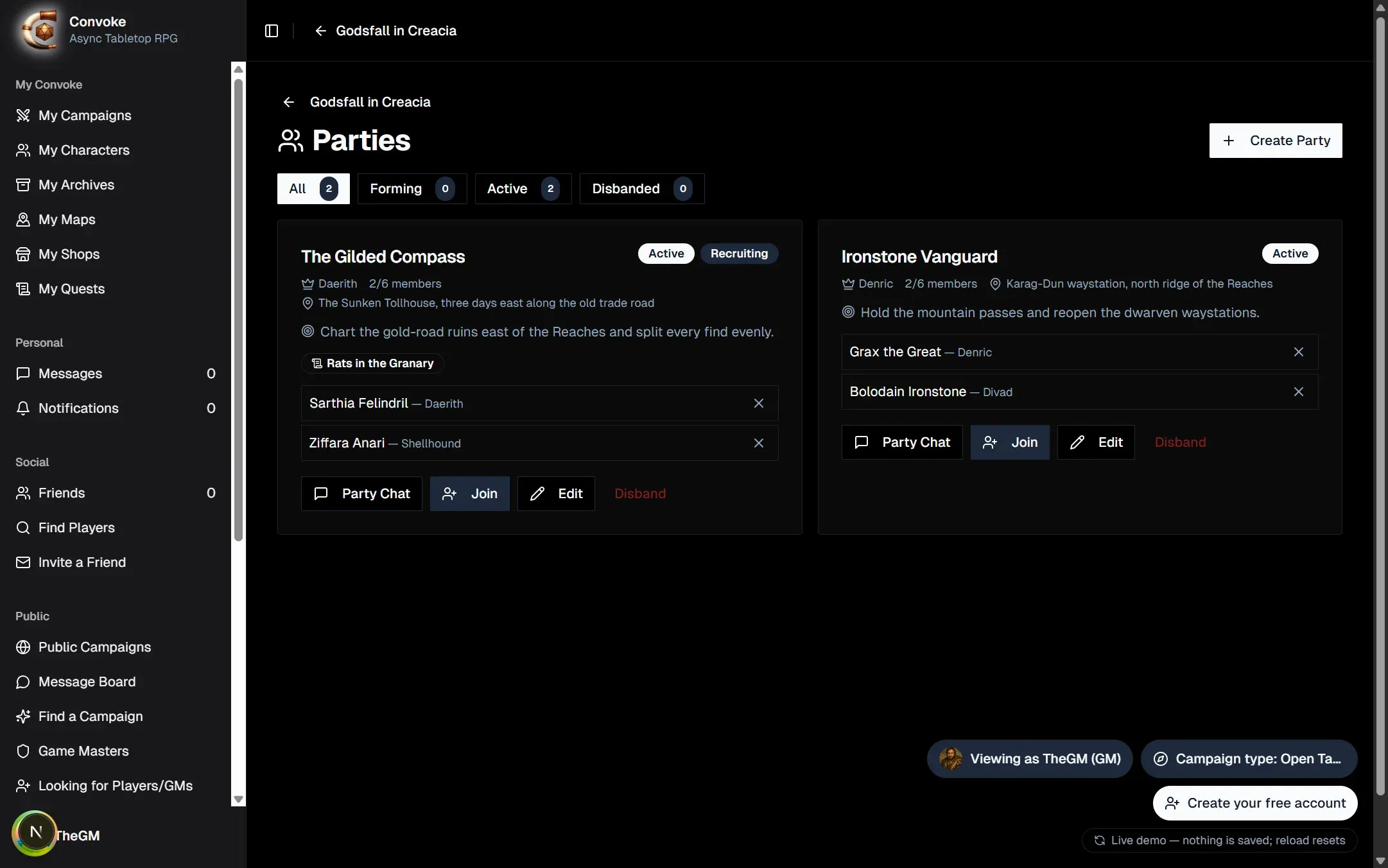
Join a party in a living world
In an World Table campaign, dozens of players share one persistent world. Start your own adventuring party or join one — your party gets its own party channel to plan and play in. When you cannot agree on where to go next, rank the options and let a vote decide; the winning quest is dispatched to your party.
- Form or join a player-run party in a massive-multiplayer world
- Your own party channel to plan and roleplay in
- Rank your options and vote on the next quest
Explore what is waiting in the world
In-World Economy
Buy gear from GM-curated shops and take on quests with rewards that pay out automatically.
World Table Worlds
Drop into a living, massive-multiplayer world, form a party, and vote on where you go next.
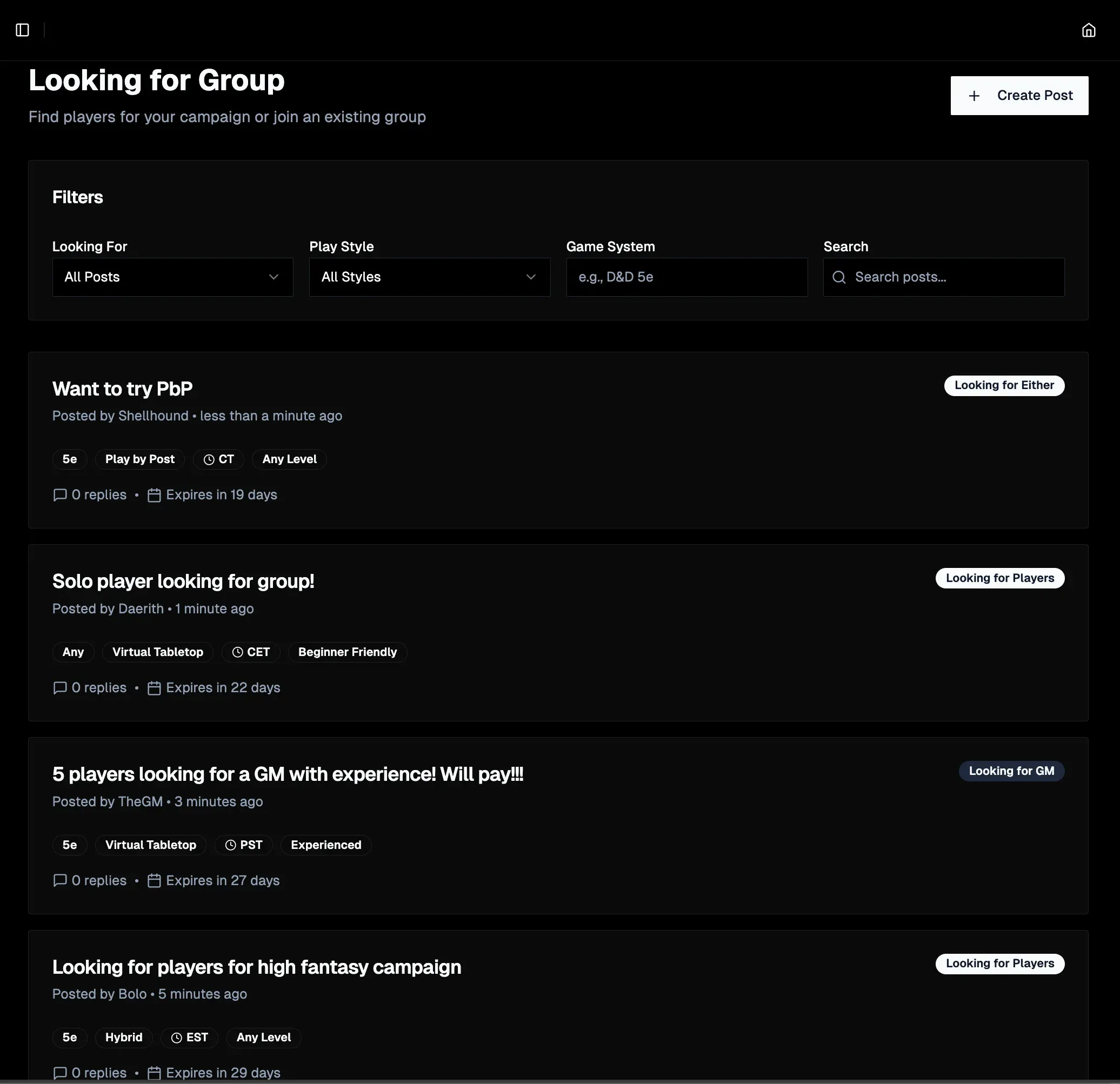
Don't have a party?
Convoke has a Looking for Group board with filters for system, tone, schedule, content boundaries, and play style — async, hybrid, or live.
Think your GM would love this?
Send them the GM page. It takes 2 minutes to read and answers every question they will have.
Create a free account.
Build a character. Join a campaign. Or start your own.
For Hybrid Groups
The session ends. The story does not.
Most adult tabletop groups meet once a month — if they are lucky. Convoke is the layer between sessions where downtime, travel, side scenes, and character moments actually happen. Then everyone shows up to the table already in the story.
No credit card. 5e today, more systems coming.
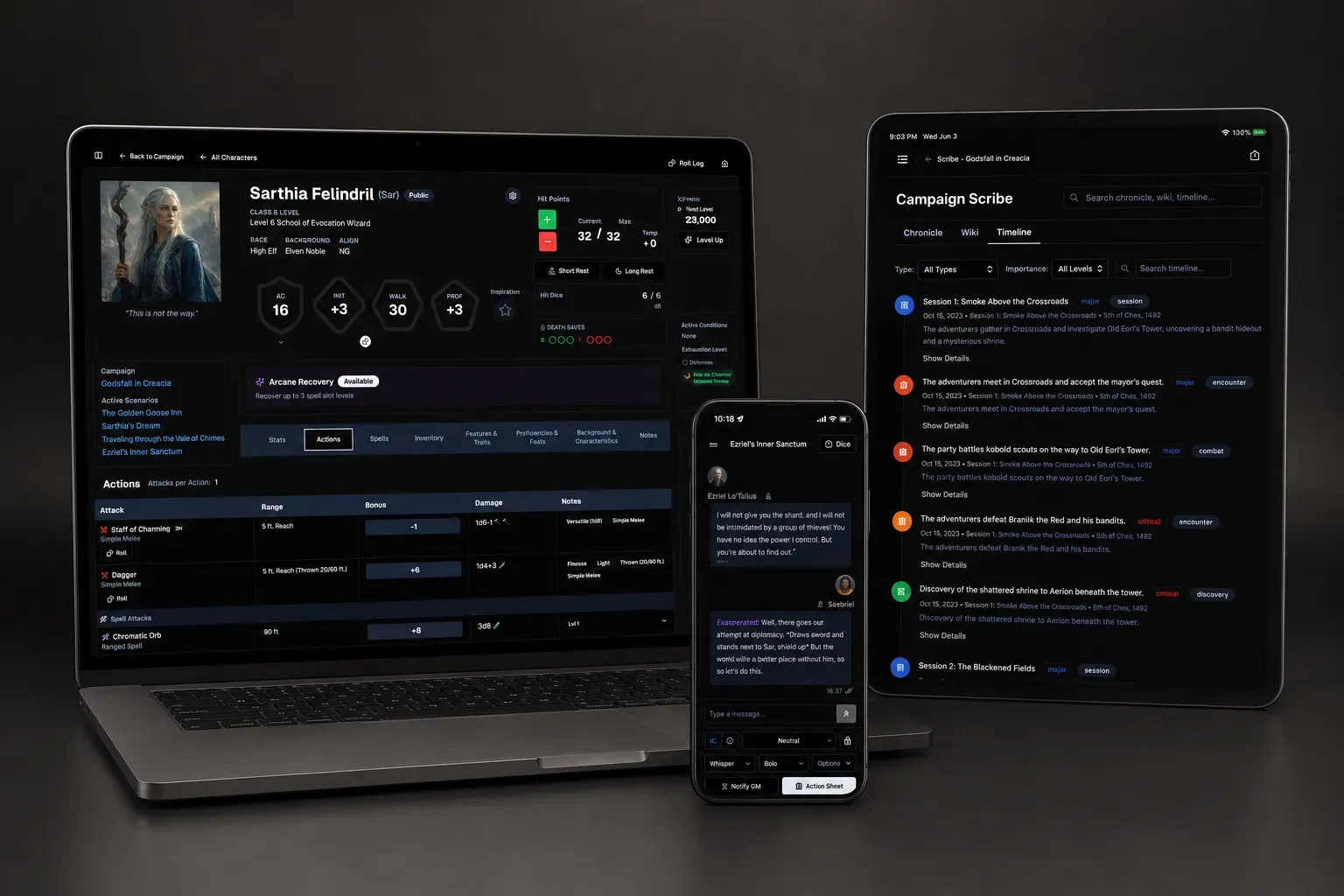
The case for the in-between
You only get four hours every three weeks.
You spend the first thirty minutes remembering where you were. The second thirty minutes shopping in town. The third thirty minutes catching the new player up. By the time the actual scene starts, you have burned half the night.
Convoke takes the parts of D&D that do not need everyone in the room — and lets them happen on everyone's own time.
What moves between sessions
Five things that no longer eat table time.
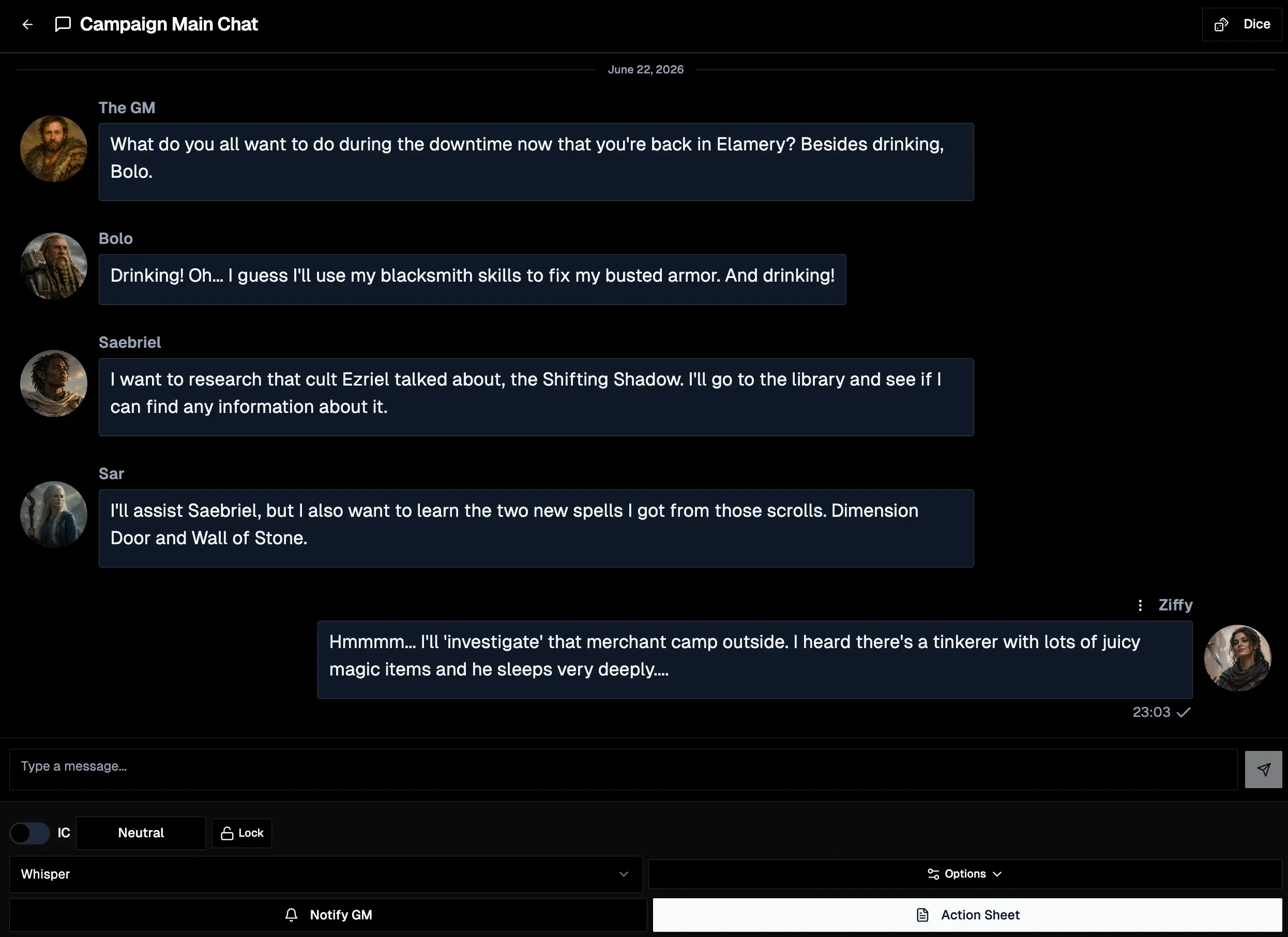
Downtime activities
Crafting, training, research, faction work, tavern conversations. A player can spend a week of their character's life on Convoke between sessions.
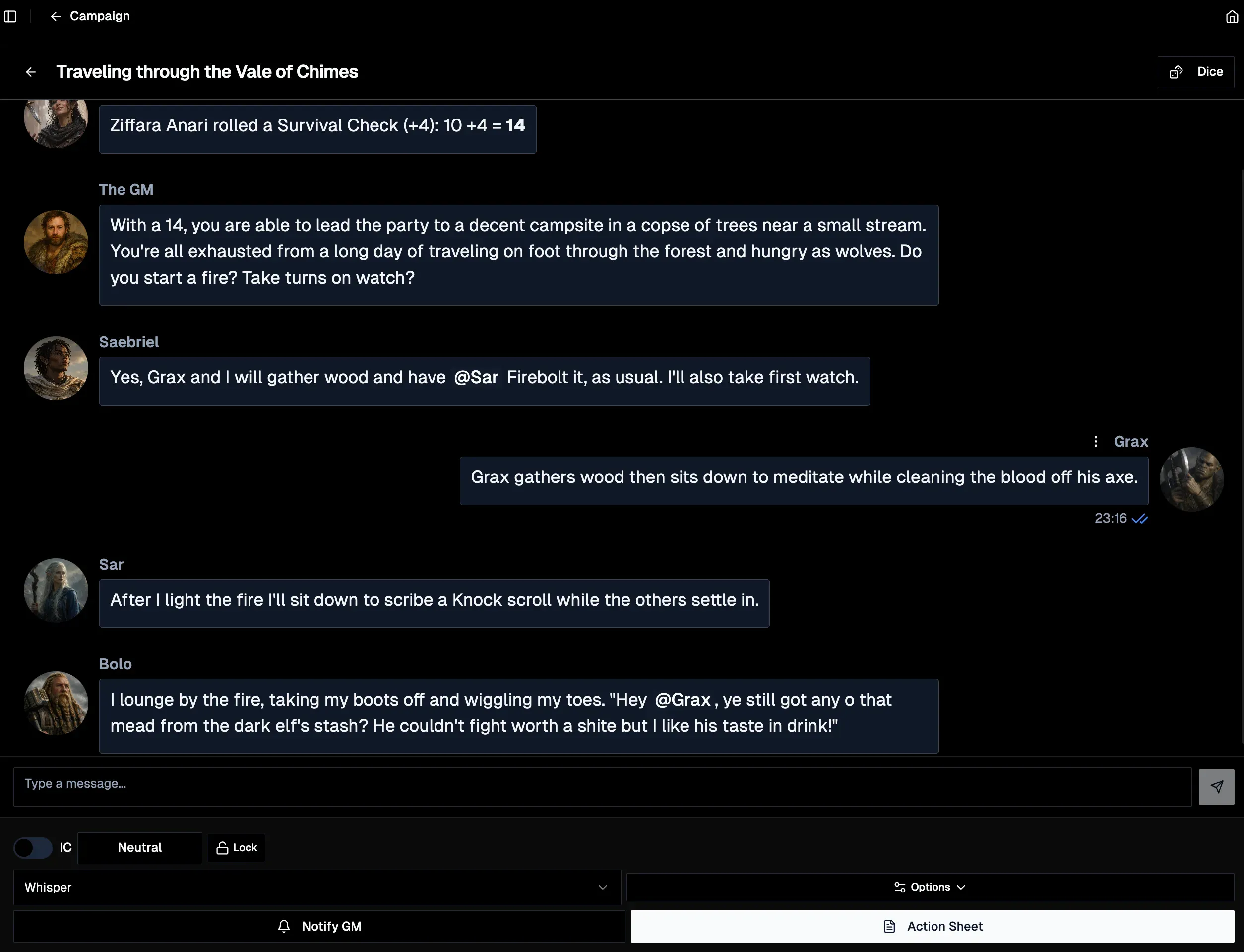
Travel
The party crosses a mountain pass. Instead of "we travel for three days" eating thirty minutes at the table, the journey unfolds async — encounters, dreams, character moments, watch rotations.
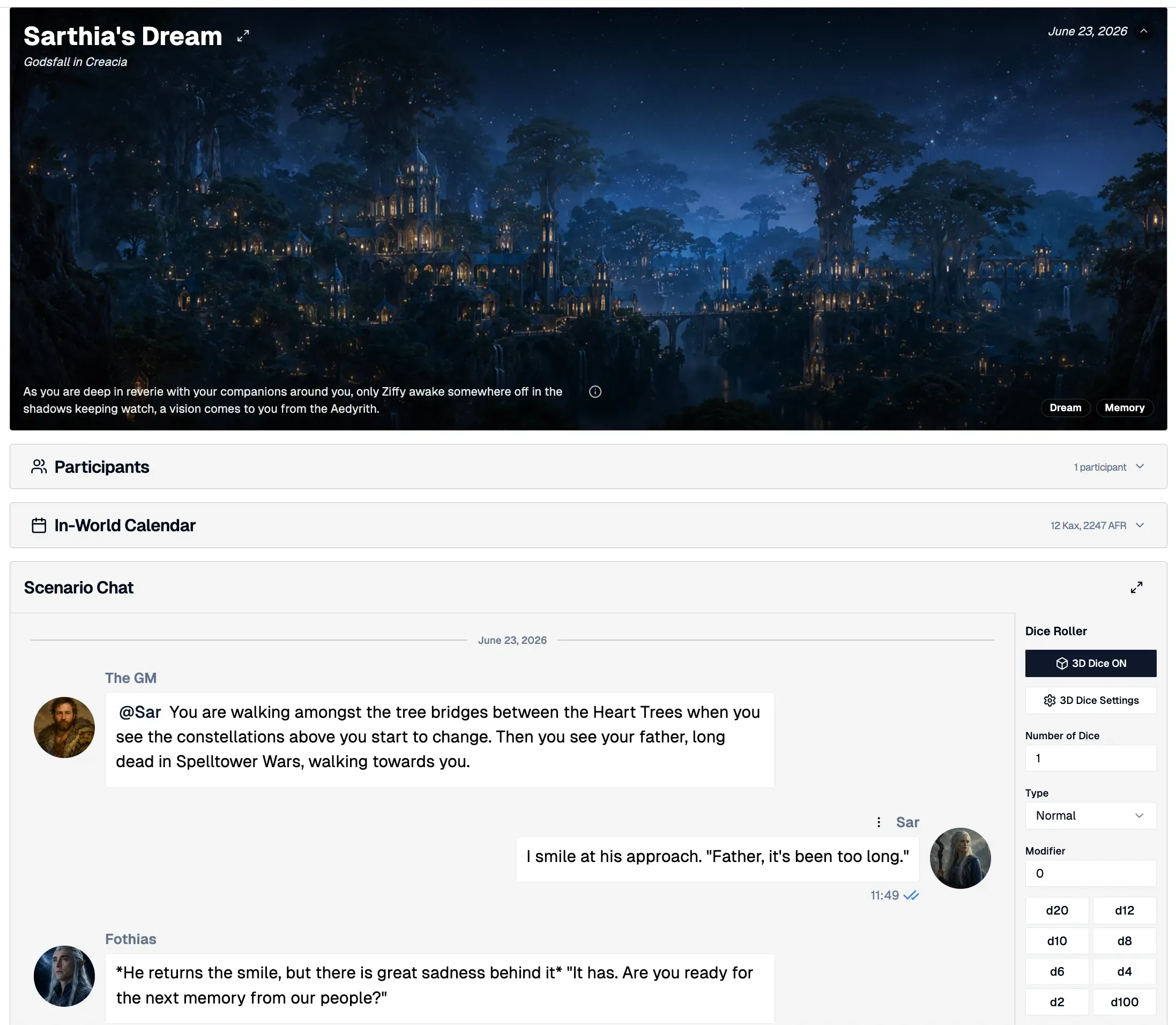
Side scenes
That backstory arc one player has been waiting to play? Run it as a one-on-one between sessions. Convoke's whispers and per-conversation visibility make solo scenes natural.
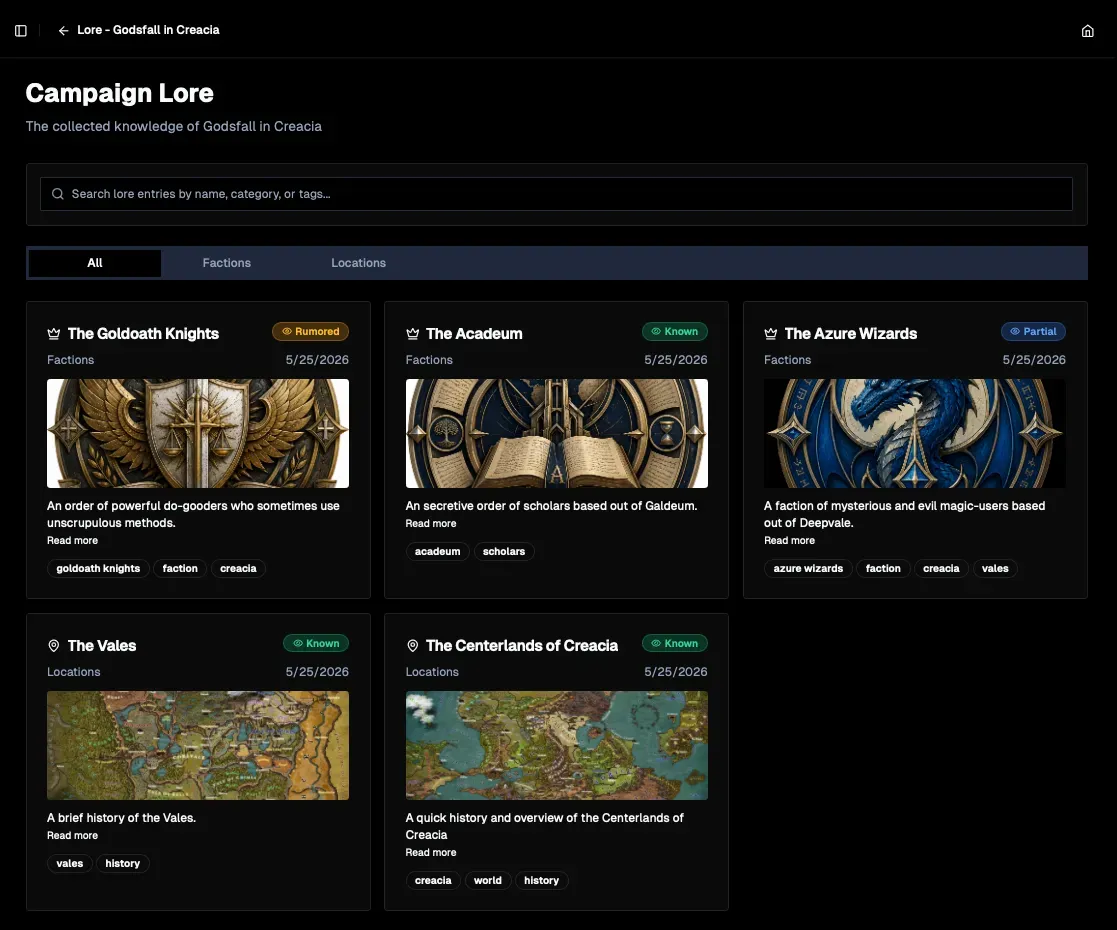
Lore reveals
The GM drops a journal page in the wiki. Players who pursue it find it. The rest of the party may never know.
Recaps
Campaign Scribe drafts a session recap from the live session so the next async post starts with everyone aligned.
What stays at the table.
- Big combats. The kind where dice fly and the room cheers.
- Boss conversations. When you want everyone leaning forward.
- The ending. Always the ending.
How a hybrid month looks.
Week 1
What happens
Live session — major combat and a cliffhanger
Where
At the table
Week 1-2
What happens
Scribe drafts the recap. Players post reactions. GM reveals lore.
Where
Convoke
Week 2
What happens
Solo backstory scene with the rogue
Where
Convoke
Week 3
What happens
Party shops, crafts, researches. Travel begins.
Where
Convoke
Week 4
What happens
Travel encounter resolves async. Party arrives at next location.
Where
Convoke
Week 4
What happens
Live session — the players walk in already there, already tense.
Where
At the table
What makes this work
Built for the in-between.
- Push notifications so async posts do not get lost
- Threaded conversations for parallel scenes
- IC/OOC toggle so chatter does not muddy roleplay
- Two calendars — real-world and in-world
- Blast the Horn — confirm the next live session without thirty Discord pings
- Lore wiki with knowledge tracking so reveals between sessions stay clean
Add Convoke to your existing campaign.
Free in open beta. Works alongside any VTT or in-person setup.
For Play-by-Post
Play-by-post, purpose-built.
Every PbP group knows the drill: Discord channel, Google Doc character sheet, dice bot, shared Drive folder for lore, and a prayer that the campaign lasts more than three months. Convoke puts it all in one place — because play-by-post deserves a real platform.
No credit card. 5e today, more systems coming.
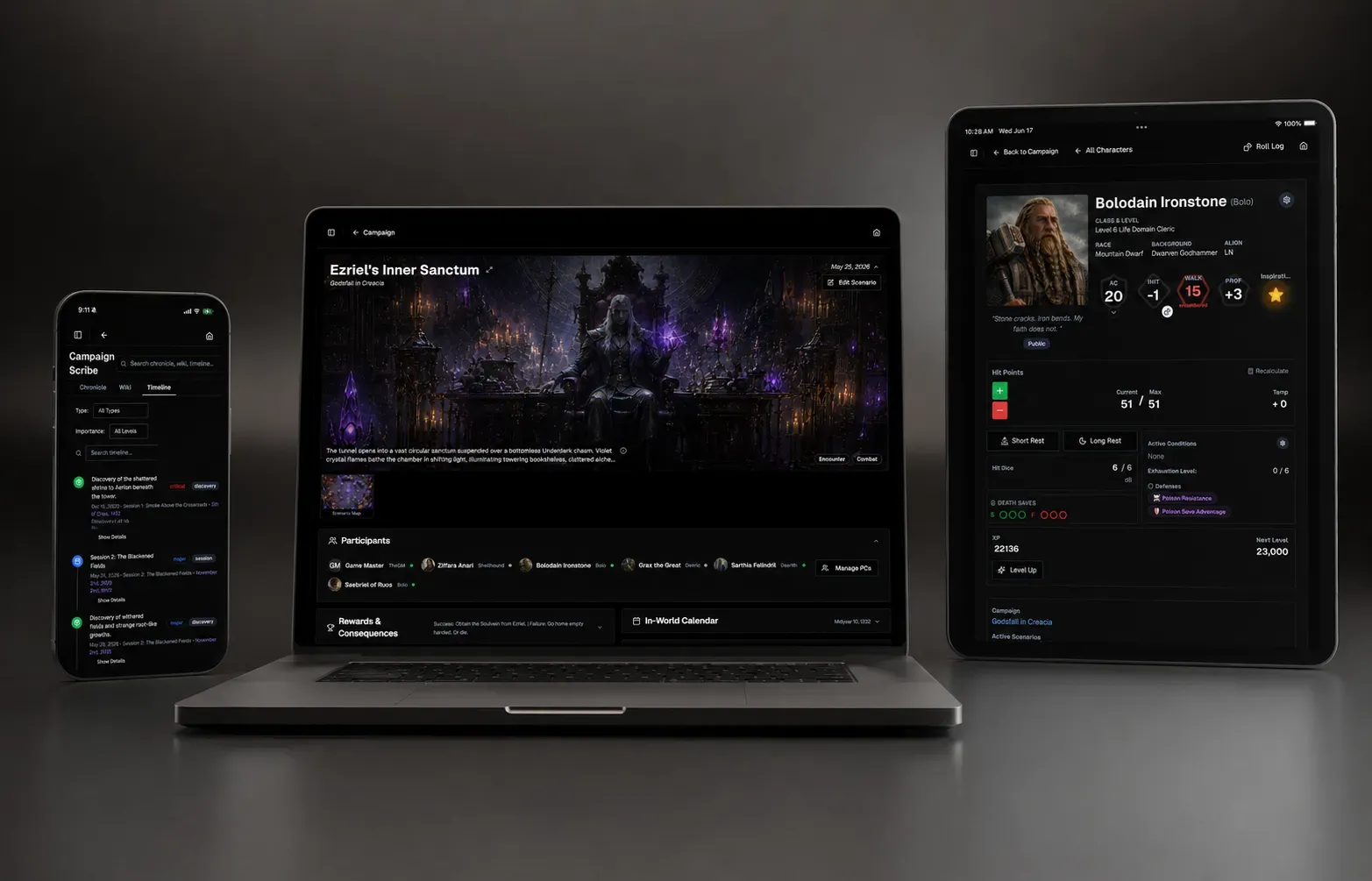
Why PbP campaigns die
The three killers of play-by-post campaigns.
1. Momentum loss
Someone does not post for a week. Then two weeks. Then the campaign is dead and nobody officially ends it.
2. Organizational chaos
The lore is in pins nobody can find. The character sheets are in a Google Doc that has not been updated since session 3. The NPC the party met four months ago? Scroll up 10,000 messages.
3. Tool friction
You are running a campaign across Discord, D&D Beyond, Google Docs, a dice bot, and Doodle. Every new player needs a 20-minute onboarding just to find the right channels.
Convoke fixes all three. One platform. Everything connected. Nothing lost.
Built for PbP
Built for the way play-by-post actually works.
IC/OOC that never bleeds
Dedicated in-character and out-of-character channels with visual distinction. Tone tags set the atmosphere of each post. No more "wait, was that in character?"
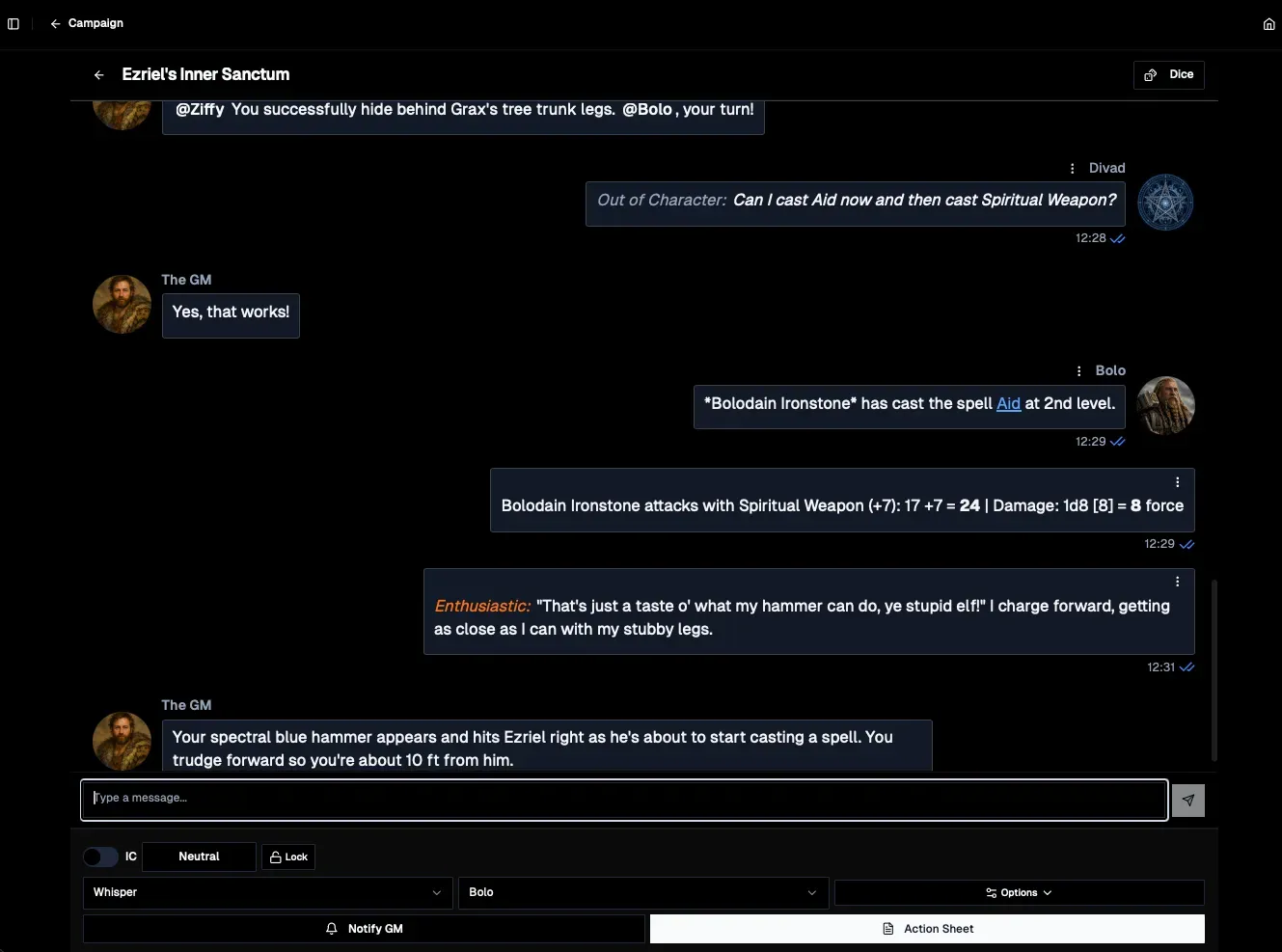
Inline everything
Dice rolls embedded in your narrative post. No switching to a bot. No "!roll 1d20+5" breaking immersion. Roll, write, post.
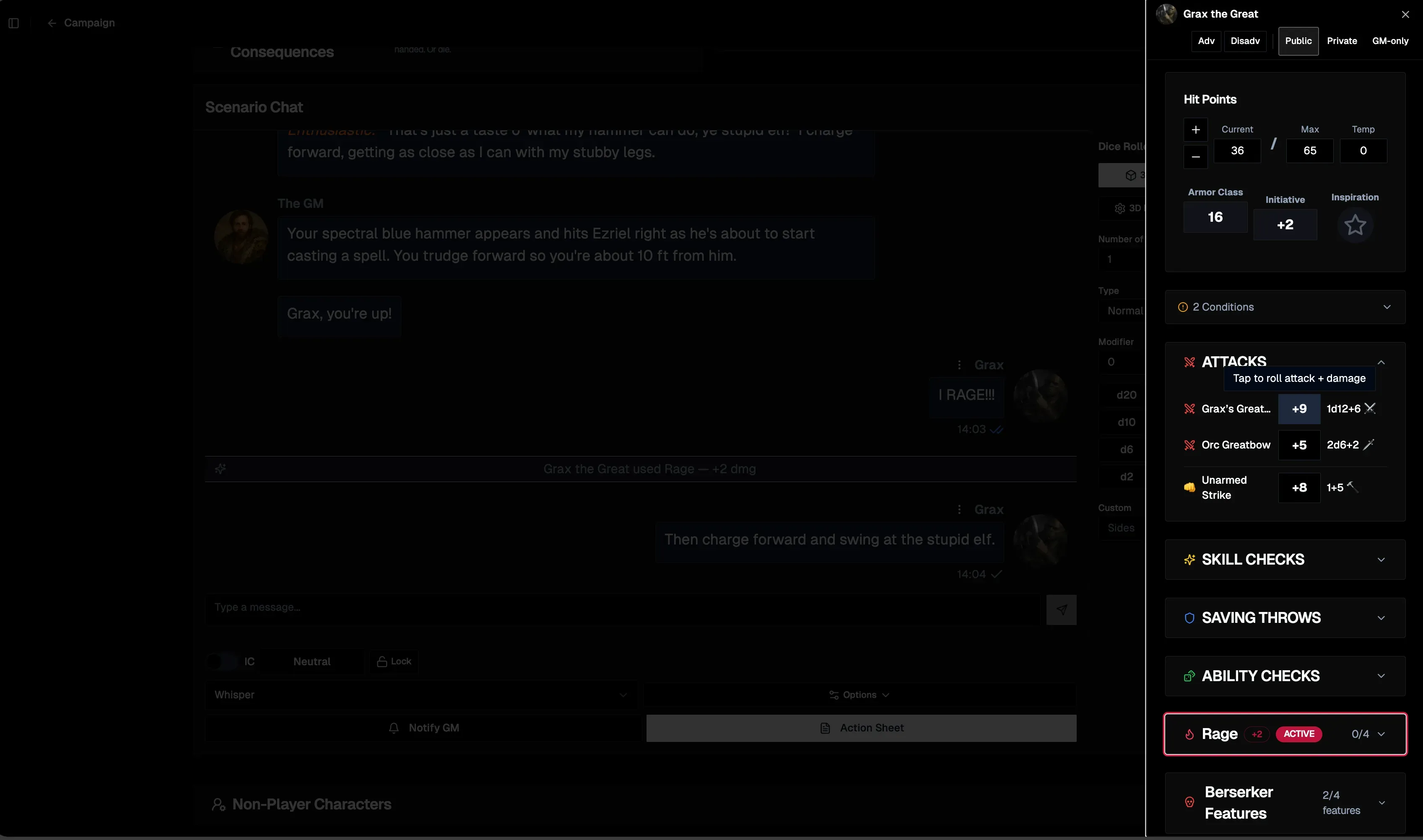
GM as NPC
When the GM speaks as an NPC, the avatar changes. The tavern keeper talks like a tavern keeper. The dragon talks like a dragon. Players always know who they are hearing.
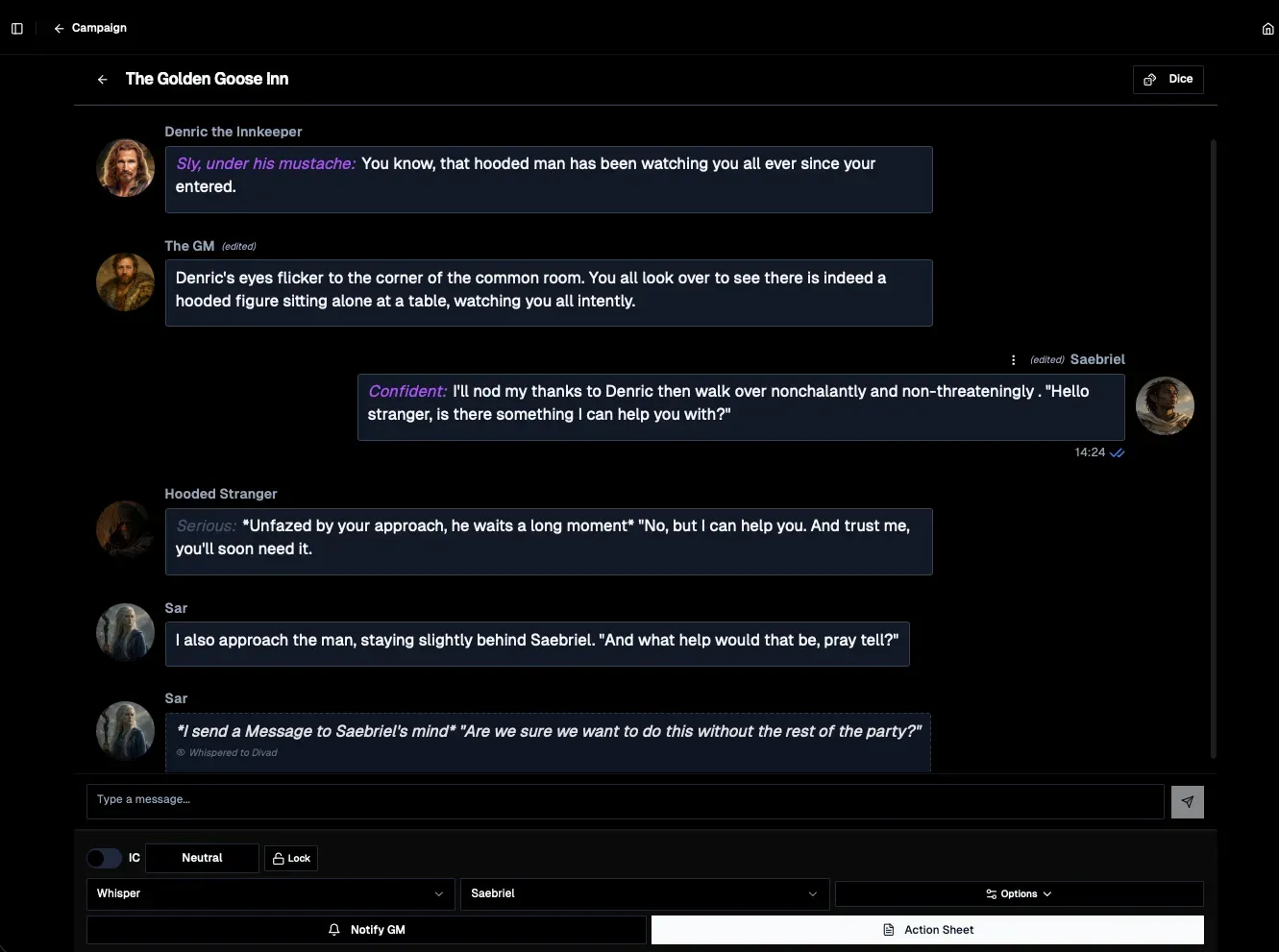
Whispers that work
Pass a note to one player. The GM always sees it. Everyone else does not. Perfect for secret backstory reveals, pickpocket attempts, or private conversations.
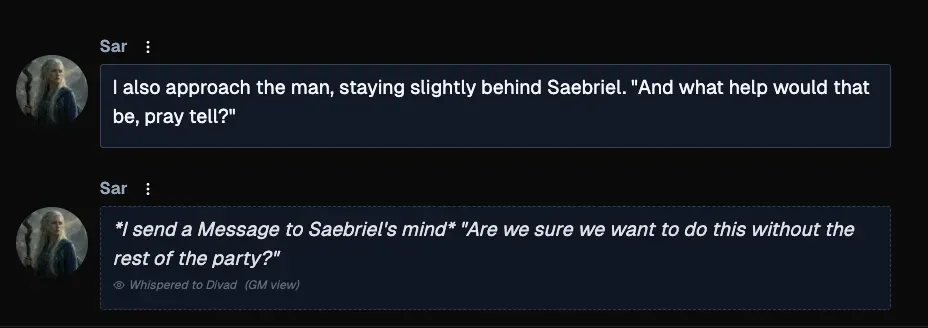
Push notifications by scene
Get notified when it is your turn in the active scene. Mute the campaign-wide OOC when you are busy. Granular controls so the app respects your time.
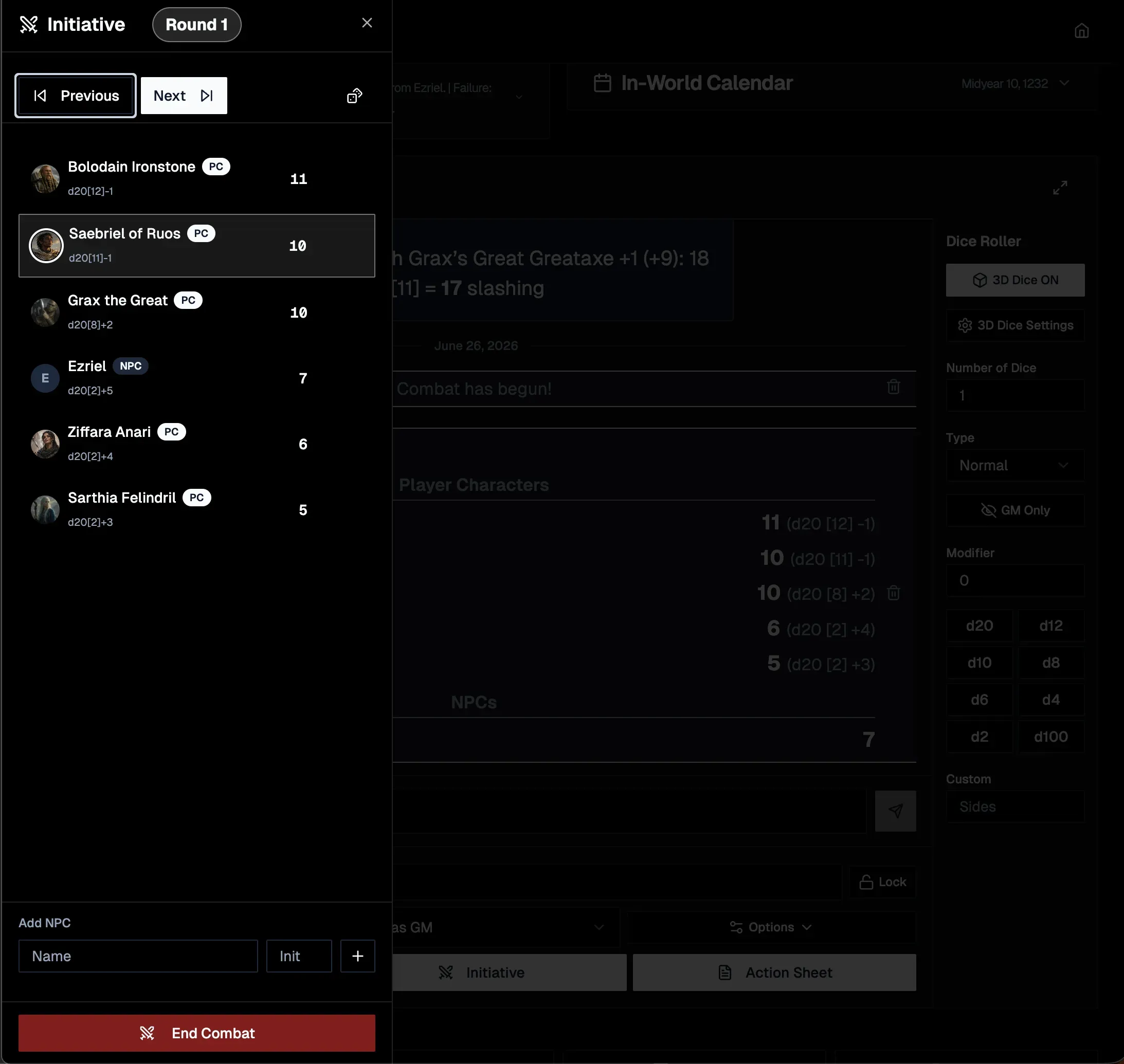
Lore that grows with the campaign
After 6 months of PbP, you have generated a novel's worth of worldbuilding. Convoke's lore wiki captures it all — searchable, linked, and with per-player knowledge.
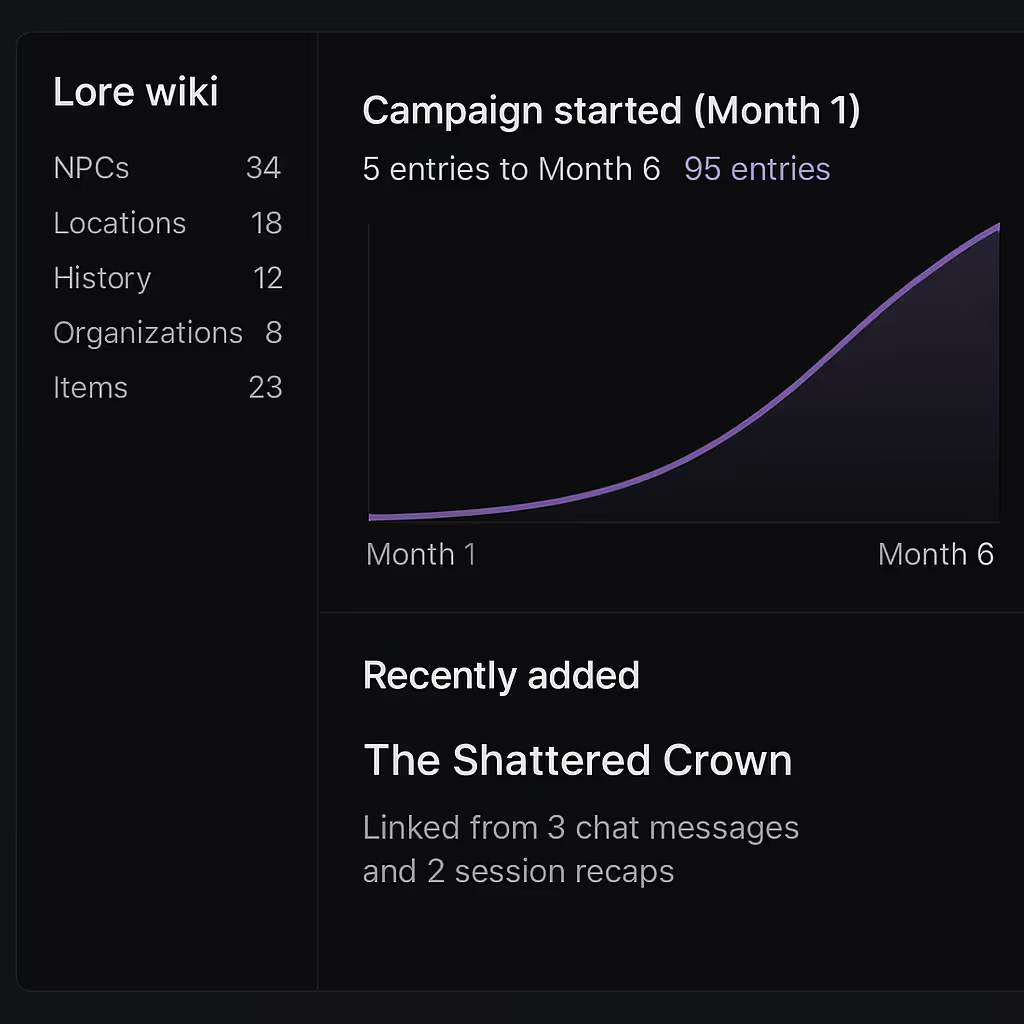
The end of manual bookkeeping
The single biggest chore in play-by-post is the GM tracking gold, purchases, and rewards by hand across thousands of messages. Convoke's in-world shops and quest boards do it for you: players buy from curated shops with the coin math handled server-side, and finished quests pay out XP, coin, and loot automatically. Nothing to add up, nothing forgotten two sessions later.
- Curated shops with automatic, server-checked coin math
- Quest boards that pay out XP, coin, and items on completion
- No gold ledgers, no forgotten rewards
If you have played PbP before, you already know what to do.
Convoke feels familiar because it is built on the same principles that made forum-based and Discord-based PbP work. We just removed the parts that do not work.
Chat
What you do now
Discord channel + dice bot
What Convoke does instead
Integrated chat with inline dice
Sheets
What you do now
Google Doc character sheet
What Convoke does instead
Live 5e character sheet in the same app
Lore
What you do now
Pinned messages for lore
What Convoke does instead
Searchable wiki with knowledge levels
Activity
What you do now
"Who is still alive?" roll call
What Convoke does instead
Activity tracking and push notifications
Reference
What you do now
Scattered reference docs
What Convoke does instead
NPC library, scenario templates, media library
Looking for a PbP group?
Convoke's LFG board lets you filter by play style (PbP), system, tone, posting frequency, timezone, and content boundaries. Find a group that matches your pace.
Play-by-post deserves better tools.
Free in open beta. Start a campaign or find one.
Features
Everything your campaign needs. Nothing it does not.
Convoke is a purpose-built platform for asynchronous tabletop RPG play. Here is everything it does — and a few things it deliberately does not.
No credit card. 5e today, more systems coming.
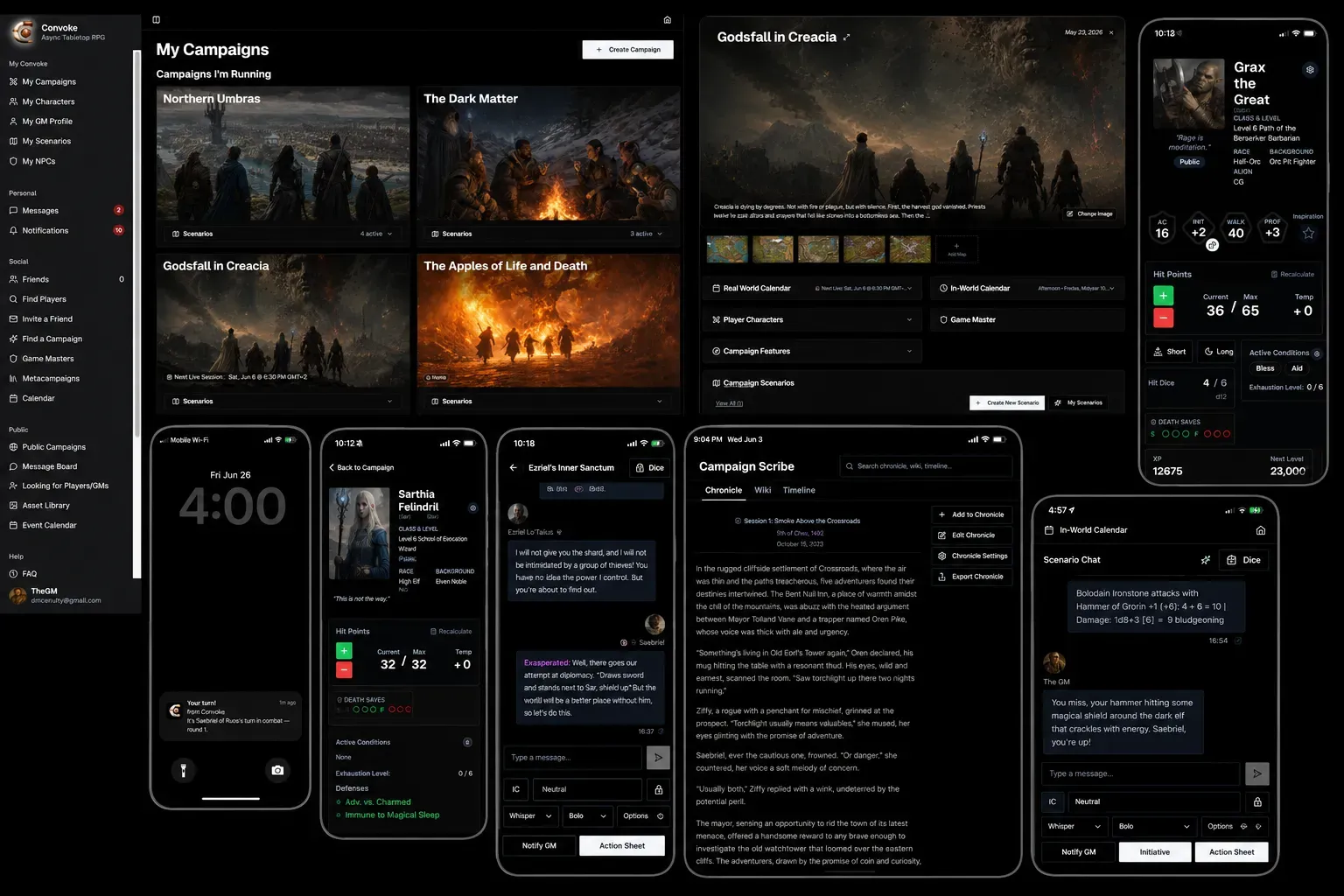
Play Together
Party Chat
In-character and out-of-character messaging with tone indicators, GM announcements, whispers, inline dice rolling, image uploads, and emoji reactions.
Inline Dice Rolling
Roll any dice formula directly in chat — public, private, or whispered. Results embed in your message. No bots, no switching apps.
Initiative Tracker
Turn-based combat tracking inline with chat. Conditions, NPC HP, round counter. Configurable visibility for player-facing vs. GM-only information.
VTT Mode
A full virtual tabletop inside your chat — tokens, fog of war, measurement, and turn-by-post combat, with opt-in 3D. Async-first and mobile-first.
Direct Messages
1-on-1 messaging between any two players or with the GM. Image sharing, unread tracking, archive.
Build Your World
Campaign Lore Wiki
Create and organize world knowledge across 10 categories. Per-player knowledge levels let the GM control exactly what each player knows.
NPC Library
Build NPCs with stat blocks, portraits, and personality notes. Reusable across campaigns. GMs can "become" any NPC in chat.
In-World Calendar
4 calendar systems (Harptos, Gregorian, Tamriel, Custom). Track in-game dates, festivals, downtime, and travel.
Scenarios & Templates
Design encounters as reusable templates. Spawn instances into active campaigns. Your prep compounds over time.
Items & Inventory
Unified inventory with categories (Consumable, Loot, Tool, Vehicle, Container). Personal or campaign-wide.
House Rules
Campaign-specific rule documentation with a rich text editor. Visible to all players.
Maps & Media
Upload and organize campaign maps, character art, and item images. Public or GM-only visibility.
Living Worlds & Economy
World Table Campaigns
Massive-multiplayer, persistent West Marches worlds. Dozens of players form their own parties, explore a living overworld, and vote on their next quest — run by co-GMs with full parity.
In-World Shops & Quests
GM-curated shops with instant, server-checked purchases and automatic coin math, plus quest boards with objective checklists and automatic XP, coin, and item rewards.
GM Marketplace
Host paid sessions and earn from the games you already run. Set your own per-seat price; players pay at booking and funds release after the session, for a low platform fee.
Stay Organized
Campaign Scribe
AI reads your party chat and drafts session recaps. You edit, you publish. Optional — turn it off and the platform works fine without it.
Blast the Horn
Async session coordination. Propose dates, set minimum-player thresholds, watch confirmations roll in. Timezone-aware.
Character Sheets
Full D&D 5e support: 13 classes, 122+ class feature trackers, 4 rest types with automatic resource recovery.
Push Notifications
Campaign invites, turn notifications, session proposals, lore reveals. Granular controls. PWA push to mobile.
Find Your People
Campaign Discovery & LFG
Find campaigns and players. Filter by play style, system, timezone, tone, and experience level.
Community
Friend system, player directory, community forums with voting. Connect beyond individual campaigns.
PWA / Mobile
Install Convoke on your home screen. Standalone mode. Offline reading. Background sync. Plays like a native app.
We do not do everything. On purpose.
- Not a video-chat replacement. Convoke does not do voice or video — keep Discord or Zoom for talking. Convoke handles everything around the call.
- No AI dungeon generation. Scribe summarizes. It does not create. Your world, your voice.
- No paywall during beta. Free means free.
System support
5e first. More coming.
Character sheets, class features, and rest types are tuned to D&D 5e today. Chat, lore wiki, session scheduling, and campaign management work for any system. Pathfinder 2e and a system-agnostic mode are on the roadmap.
Ready to try it?
Free during open beta. Start a campaign or join one.
Pricing
Free while we build. Fair when we charge.
Convoke is in open beta. Everything is free. When we introduce paid tiers, we will give you plenty of notice — and there will always be a generous free tier.
No credit card required. No trial timer.
Open Beta
What is free right now.
Everything is included during open beta:
- Unlimited campaigns
- Full party chat (IC/OOC, whispers, dice)
- 5e character sheets (13 classes, 122+ trackers)
- Campaign Scribe (AI session recaps)
- Blast the Horn (session scheduling)
- Lore wiki with knowledge tracking
- NPC library
- In-world shops and quest boards
- World Table multiplayer campaigns
- VTT Mode (tokens, fog, turn-by-post combat)
- Host paid sessions (GM marketplace)
- In-world calendar
- Scenario templates
- Items and inventory
- Direct messages
- Push notifications
- PWA mobile app
- LFG board
- Community features
Our pricing philosophy
What we believe about pricing.
We have not finalized tiers yet, but here is what we believe:
1. The free tier should be genuinely useful.
A GM should be able to run a campaign without paying. Free is not a demo — it is the product.
2. Paid tiers should unlock scale, not basics.
More campaigns, more storage, advanced AI features — not "you need to pay to use chat."
3. GMs pay, players do not.
Players should never need to pay to join a campaign. One subscription covers the whole party.
4. No surprise charges.
We will announce pricing at least 30 days before any billing begins. Beta users will get a loyalty discount.
Planned tier structure (provisional)
Free
Free
- Active campaignsGenerous
- Players per campaignStandard
- Campaign Scribe (AI recaps)Monthly quota
- Map & image generation (AI)Monthly quota
- Lore & NPC libraryGenerous
- StorageStandard
- Host paid sessionsIncluded
- SupportCommunity
Adventurer (provisional)
TBD
- Active campaignsMore
- Players per campaignExpanded
- Campaign Scribe (AI recaps)Higher quota
- Map & image generation (AI)Higher quota
- Lore & NPC libraryExpanded
- StorageExpanded
- Host paid sessionsIncluded
- SupportEmail
Guildmaster (provisional)
TBD
- Active campaignsMost
- Players per campaignMaximum
- Campaign Scribe (AI recaps)Highest quota
- Map & image generation (AI)Highest quota
- Lore & NPC libraryUnlimited
- StorageLargest
- Host paid sessionsIncluded
- SupportPriority
These tier names, prices, and limits are provisional and not final. Everything is currently unlimited during open beta. We are sharing the structure for transparency — beta users will be grandfathered at a discount, and player accounts are always free.
Frequently asked questions
Start free today.
Everything is included during open beta. No credit card, no trial timer.
Convoke vs Discord
You already use Discord. You do not have to stop.
Discord is where your friends are. It is also where your session notes, NPC descriptions, character sheets, and scheduling threads go to die. Convoke handles the campaign. Discord handles the hangout.
No credit card. 5e today, more systems coming.
We are not here to replace Discord.
Discord is an incredible communication platform. Millions of TTRPG players use it daily, and for good reason:
- Real-time voice and video for live sessions
- Large community servers for finding groups and sharing content
- Bots for dice rolling, music, and utilities
- It is free and everyone already has it
Where Discord stops and Convoke starts.
IC/OOC separation
Discord
Separate channels (honor system)
Convoke
Built-in toggle per message
Tone and atmosphere
Discord
Nothing — copy is copy
Convoke
Tone tags (tense, hopeful, comedic, wry)
Whispers
Discord
DM the player separately
Convoke
Inline whispers — GM always has visibility
Dice rolling
Discord
Bot command (!roll 1d20+5)
Convoke
Inline in your message
Character sheets
Discord
External link (D&D Beyond)
Convoke
Integrated 5e sheets with 122+ trackers
Resource tracking
Discord
Manual or external
Convoke
Automatic — rest types recover the right resources
Session recaps
Discord
Someone takes notes
Convoke
Campaign Scribe AI drafts, GM edits
Lore / worldbuilding
Discord
Pinned messages (max 50)
Convoke
Full wiki with per-player knowledge levels
NPC management
Discord
A text channel of stat blocks
Convoke
NPC library with portraits, reusable across campaigns
Session scheduling
Discord
@everyone + when2meet
Convoke
Blast the Horn — async votes, auto-confirm
Calendar
Discord
None (external)
Convoke
Dual calendar — real-world + in-world
Push notifications
Discord
Everything or nothing
Convoke
Granular per feature
Search
Discord
Basic text search
Convoke
Contextual search within campaigns, lore, NPCs
New player onboarding
Discord
"Read the pins and scroll up"
Convoke
Session recaps, lore wiki, character sheet
Mobile experience
Discord
Discord mobile (general purpose)
Convoke
PWA optimized for campaign play
Campaign organization
Discord
Channel categories (manual)
Convoke
Structured campaigns with status tracking
Media management
Discord
Uploaded to chat (lost in scroll)
Convoke
Media library linked to lore and characters
Initiative / combat
Discord
Bot-based (Avrae, etc.)
Convoke
Built-in initiative tracker
In-world economy
Discord
None
Convoke
GM shops + quest boards with automatic rewards
Massive multiplayer
Discord
One server, one group
Convoke
World Table worlds — many parties, one persistent world
Discord works until it does not.
For the first few sessions, Discord is fine. You make a server, add some channels, pin the important stuff, and start playing. Then:
Month 2
The lore channel has 400 messages. Nobody remembers where the quest objectives are pinned.
Month 4
A new player joins. You tell them to "read the pins and scroll up." They do not. They can not. There is too much.
Month 6
The campaign is technically active, but the last three sessions were cancelled because scheduling died in general-chat between memes and off-topic debates.
Month 8
The campaign is dead. Nobody said it out loud. The Discord server is still there, a monument to what could have been.
This is not a Discord problem. This is a "using a general chat app for a specialized task" problem. Convoke is the specialized tool.
Convoke + Discord. Not Convoke vs. Discord.
Many groups will use both. Here is how:
- Discord: Voice/video for live sessions. Community hangout. Memes. Off-topic banter. Bot integrations.
- Convoke: Campaign chat (IC/OOC). Character sheets. Lore wiki. Session scheduling. Recaps. NPC library. Async play.
Switching takes five minutes. Literally.
- Create a free Convoke account (30 seconds)
- Create your campaign (1 minute)
- Invite your players via link (30 seconds)
- Players create characters or import from D&D Beyond (2-3 minutes)
- Post your first scene in party chat
Your Discord server stays. Your Convoke campaign starts. Nothing is lost.
Bots were the best we had. Now there is something better.
Avrae, Tupper, Dice Maiden — these bots are incredible community achievements. They turned Discord into a barely-functional RPG platform through sheer ingenuity.
But they are band-aids on a tool that was never meant for this. Every bot is a separate configuration. Every command is a context switch. Every crash is a session delay.
Convoke builds all of this in natively. Dice rolls, character identity in chat, resource tracking — no bots, no configuration, no downtime.
Your campaign deserves its own home.
Free in open beta. Keep your Discord for hanging out — give your campaign a platform that was built for it.
Campaign Scribe
Session recaps that write themselves. So you do not have to.
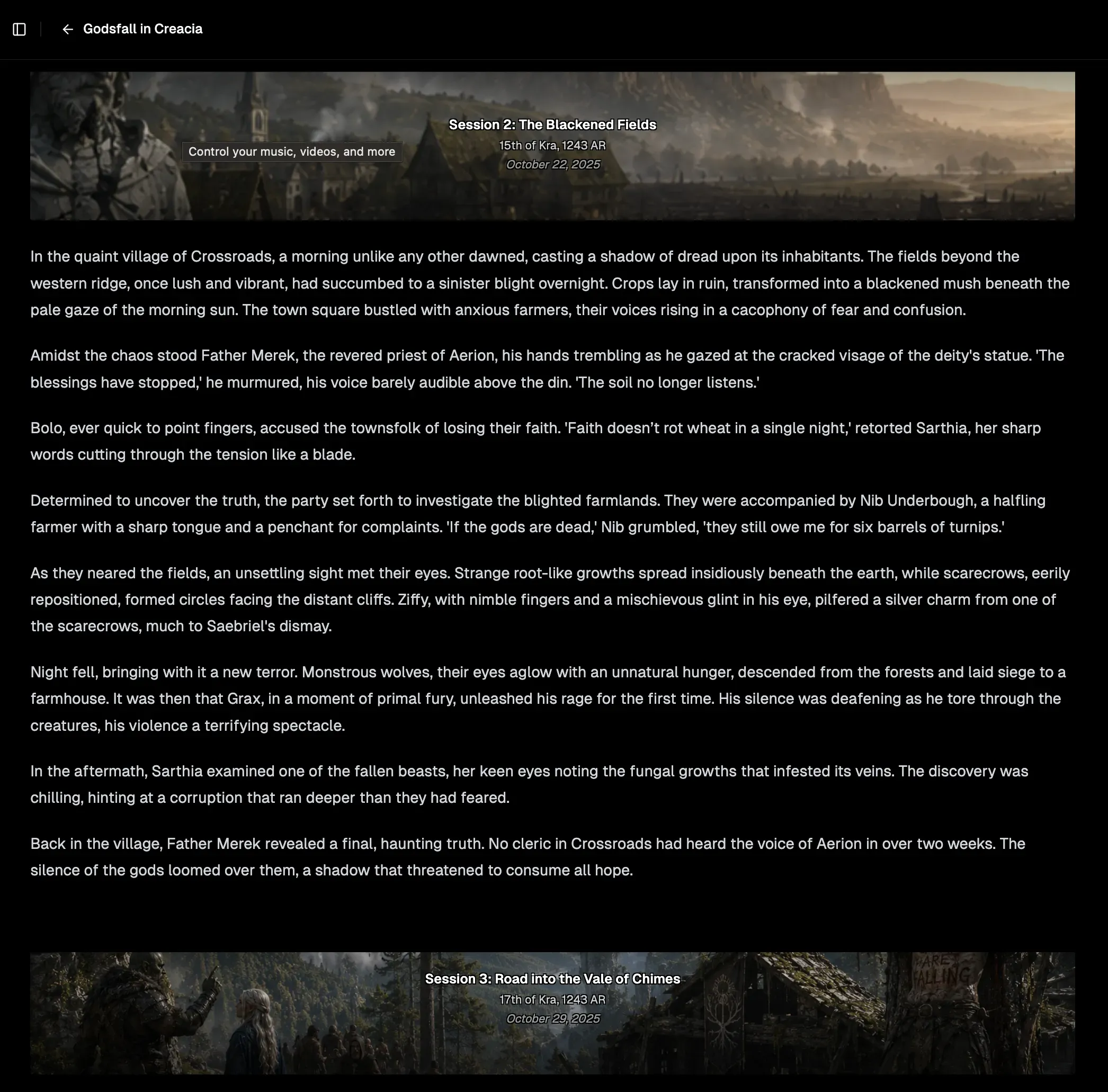
Campaign Scribe reads your party's chat, drafts a recap, and hands it to you for edits. Publishing takes ninety seconds. Your players walk into the next session already aligned. Your voice — and your secrets — stay yours.
No credit card. 5e today, more systems coming.
Why this exists
The recap problem.
Every GM knows the math. A four-hour session generates an hour of recap work — if you do it. Most do not. Without recaps, the first thirty minutes of every session is "what were we doing again?" and the player who missed last week is permanently behind.
Scribe takes the part of GMing that nobody actually loves — the recap — and turns it into a draft you can fix in two minutes.
How it works.
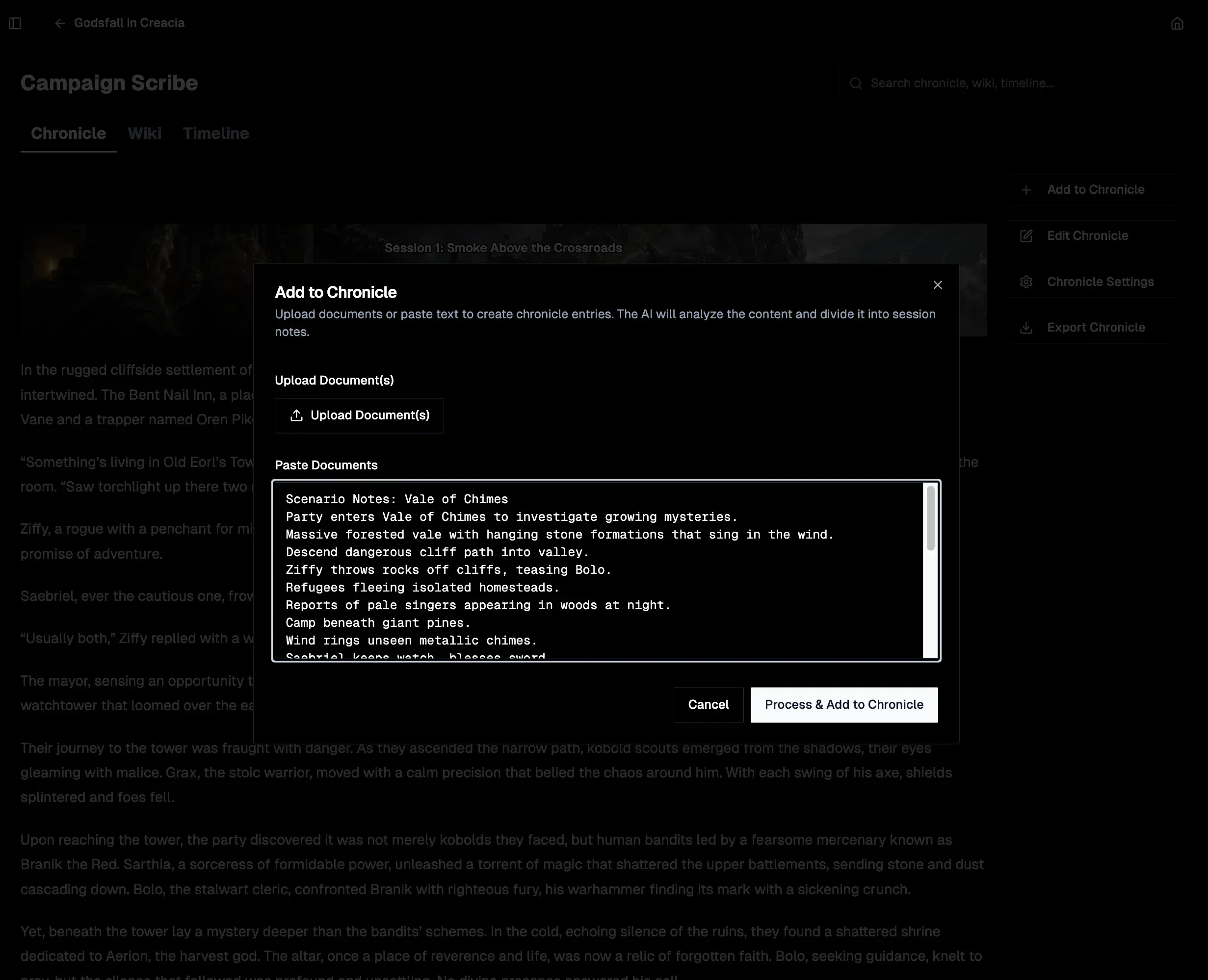
1. Scribe reads what already happened
Convoke logs your party chat with timestamps, dice rolls, and IC/OOC tags. Scribe ingests the session's messages and identifies key moments — encounters, decisions, NPC introductions, lore reveals.
2. Scribe drafts a recap
You get a draft in your voice — Scribe learns from recaps you have edited before. It tags the key NPCs and locations to your wiki automatically.
3. You edit
Trim, add, rewrite, delete. The draft is a starting point, not a final cut. You always see exactly what Scribe is going to say before any player sees it.
4. You publish
One click sends the recap to the party feed. Players who missed the session catch up in two minutes. New players joining mid-campaign get real continuity.
What Scribe knows not to say.
- Hidden lore. If a lore entry is marked secret or unrevealed, Scribe will not mention it.
- Per-player knowledge. Scribe respects who-knows-what state. The barbarian's recap can read differently from the wizard's.
- GM whispers. Anything in a private channel with you stays out of the recap.
What Scribe is not.
- Not a ghostwriter. It drafts; you decide what is true.
- Not required. Disable it per-campaign. Convoke works perfectly without a single AI call.
- Not a replacement for GM judgment. Scribe's draft is a suggestion. The canon is whatever you publish.
Spend less time on recaps. Spend more time at the table.
Blast the Horn
Schedule the next session in under a minute.
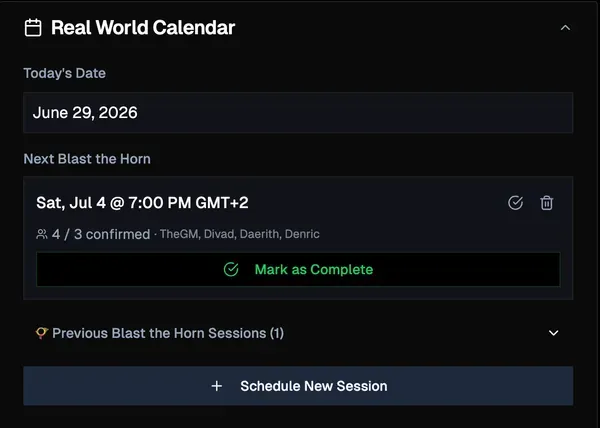
Blast the Horn is Convoke's async session-coordination tool. Propose a date, set a minimum-player threshold, watch confirmations roll in. When the threshold hits, the session locks in. No more "does next Thursday work?" threads that die on day three.
No credit card. 5e today, more systems coming.
How it works.
1. The GM blasts the horn
Pick a few candidate dates. Set a minimum number of players required. Add a note: "evening session, BYOB, we are finishing the heist." Hit send.
2. Players vote
Each player sees the proposal and confirms — yes / maybe / no — for each candidate date. Convoke handles timezones automatically. Comments thread underneath.
3. The session confirms itself
When a date hits the minimum-player threshold, Convoke locks it in, posts to the campaign calendar, and pushes notifications to everyone confirmed.
4. The session happens
When session day arrives, Convoke pings everyone an hour before. Late posts, link sharing, and pre-session chatter stay in the campaign.
Why it works.
- Async — no group call required to schedule a group call
- Timezone-aware — every player sees their own local time
- Threshold-based — sessions confirm or do not, automatically
- Calendar-integrated — the in-world calendar updates with the real-world session
- Notification-driven — Convoke pushes to mobile when something needs your attention
Who it is for.
- Adult groups whose schedules never quite line up
- Hybrid campaigns trying to lock in their next live session
- Play-by-post groups who occasionally want to gather live
- GMs who run multiple campaigns and need to triangulate calendars
Stop chasing your group. Start playing with them.
Lore Wiki
Your world, with built-in secrets.
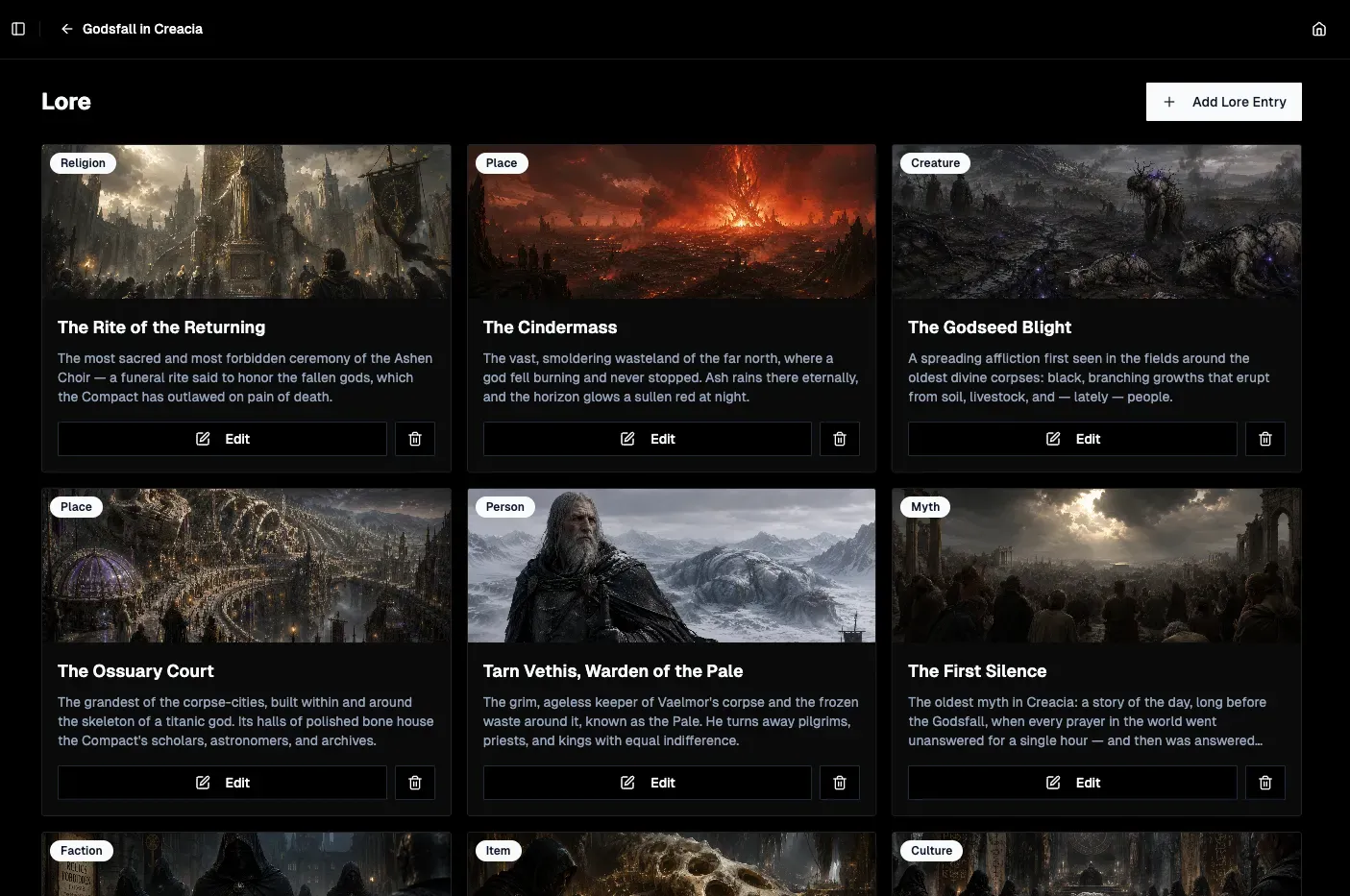
Convoke's lore wiki gives every NPC, location, faction, and magic item its own entry — and a knowledge level per player. Unknown. Rumored. Partial. Known. Expert. When a player clicks a name, they see exactly what their character would know. Build your world without fearing the wiki.
No credit card. 5e today, more systems coming.
The problem
Every GM who has ever built a wiki knows the fear.
You write detailed entries for the lich's backstory, the hidden temple, the faction's real motives — and then a player opens the wiki and reads all of it. There is no "this character does not know that yet."
Discord pins max out at fifty per channel. Google Docs have no access control beyond "everyone can see everything." Notion pages get buried. World Anvil is powerful but not connected to your campaign's chat, dice, or session notes.
The result: GMs stop writing things down. And campaigns lose their history.
How it works.
1. Create entries across 10+ categories
Location, NPC, History, Organization, Religion, Culture, Magic, Item, Event, Law — and more. Each entry gets rich text, images, tags, and links to related entries and NPCs.
2. Set knowledge levels per player
Five states: Unknown, Rumored, Partial, Known, Expert. Assign a default for the whole party, then override for individuals. The rogue who eavesdropped in the tavern sees more than the barbarian who was arm-wrestling outside.
3. Players see only what their character knows
When a player opens a lore entry, Convoke filters it to their knowledge level. Rumored entries show fragments. Unknown entries do not appear at all.
4. Reveal deliberately
Drop a lore reveal between sessions. Upgrade a player's knowledge level after a great investigation check. Link a reveal to a session recap so the moment is preserved.
What makes it different.
- 10+ lore categories — not a flat wiki, but a structured world with typed entries
- 5 knowledge levels per player — granular control from Unknown to Expert
- Linked to chat and recaps — mention an NPC in chat, click through to their lore entry
- Hierarchical organization — nest entries under parent entries
- AI-suggested connections (optional) — Scribe can suggest links between entries you might have missed
- Secret and public visibility — mark entries as GM-only secrets or public to all campaign members
Who it is for.
- GMs building living worlds — stop losing your worldbuilding to scattered docs and forgotten pins
- Play-by-post groups — after six months of PbP, you have a novel's worth of worldbuilding. Capture it all.
- Hybrid groups — reveal lore between sessions. The GM drops a journal page in the wiki; players who pursue it find it.
- Players who want to engage — click any NPC or location in chat and see exactly what your character knows.
Build a world your players can explore — without spoiling what is next.
Open Table
One world. Dozens of players. Always in motion.
World Table campaigns are massive-multiplayer, persistent West Marches worlds. Dozens of players share one living world, form their own adventuring parties, and get dispatched on quests — run by a team of co-GMs with full, equal control. You choose World Table when you create a campaign, and your world never stops between sessions.
No credit card. 5e today, more systems coming.
What it is
The West Marches, without the wall of forum threads.
The old world-table dream: a shared world, a rotating cast of players, and adventuring parties that form on the fly around whoever is online this week. No single fixed group. No campaign that stalls because two people are on holiday. The world is always open.
It used to take a heroic GM and a sprawl of forum threads, spreadsheets, and pinned messages to keep it all straight. Convoke builds the whole format in — parties, party channels, a living overworld map, quest voting, and co-GMs — so a massive-multiplayer world runs itself instead of running you.
How an World Table world works
Everything a living world needs, built in.
One persistent world, many parties
An World Table campaign holds dozens of players — 30, 60, 100 or more — in a single, continuous world. The story never pauses for a scheduling thread; it advances wherever a party is active.
- Massive-multiplayer: many parties share one world
- A persistent world that keeps living between sessions
- Set your world's player cap and party sizes at creation
Players form their own parties
Anyone in the world can start a party or join one. A character belongs to one party at a time — so leaving one band and joining another is a real, in-world decision. Parties create, join, leave, and disband as the story moves.
- Player-formed parties — create, join, leave, disband
- One party per character at a time
- The roster is the players', not a GM chore
Every party gets its own channel
Each party plans and roleplays in its own chat lane — a dedicated party channel that keeps their thread of the story together. Your GMs can always read every channel, so nothing important ever drifts out of view.
- A dedicated chat lane per party
- GMs always have full visibility into every channel
- Keeps parallel parties from stepping on each other
Run it with co-GMs, as equals
A world this size is too much for one person — so it does not have to be one person. Add co-GMs with full, equal control. Every GM can author content and manage members. No single bottleneck, no "only the owner can do that."
- Multiple co-GMs with full, equal control
- Every GM can author content and manage members
- Share the load of a living world
A living overworld map
The world reveals itself as players explore. Locations surface on a shared overworld map in stages — hidden, then rumored, then discovered — and each pin ties to a real quest or shop your players can actually act on.
- Knowledge-staged pins: hidden, rumored, discovered
- Pins reference real quests and shops, not flavor text
- The map grows as parties push into the unknown
Vote on your next quest
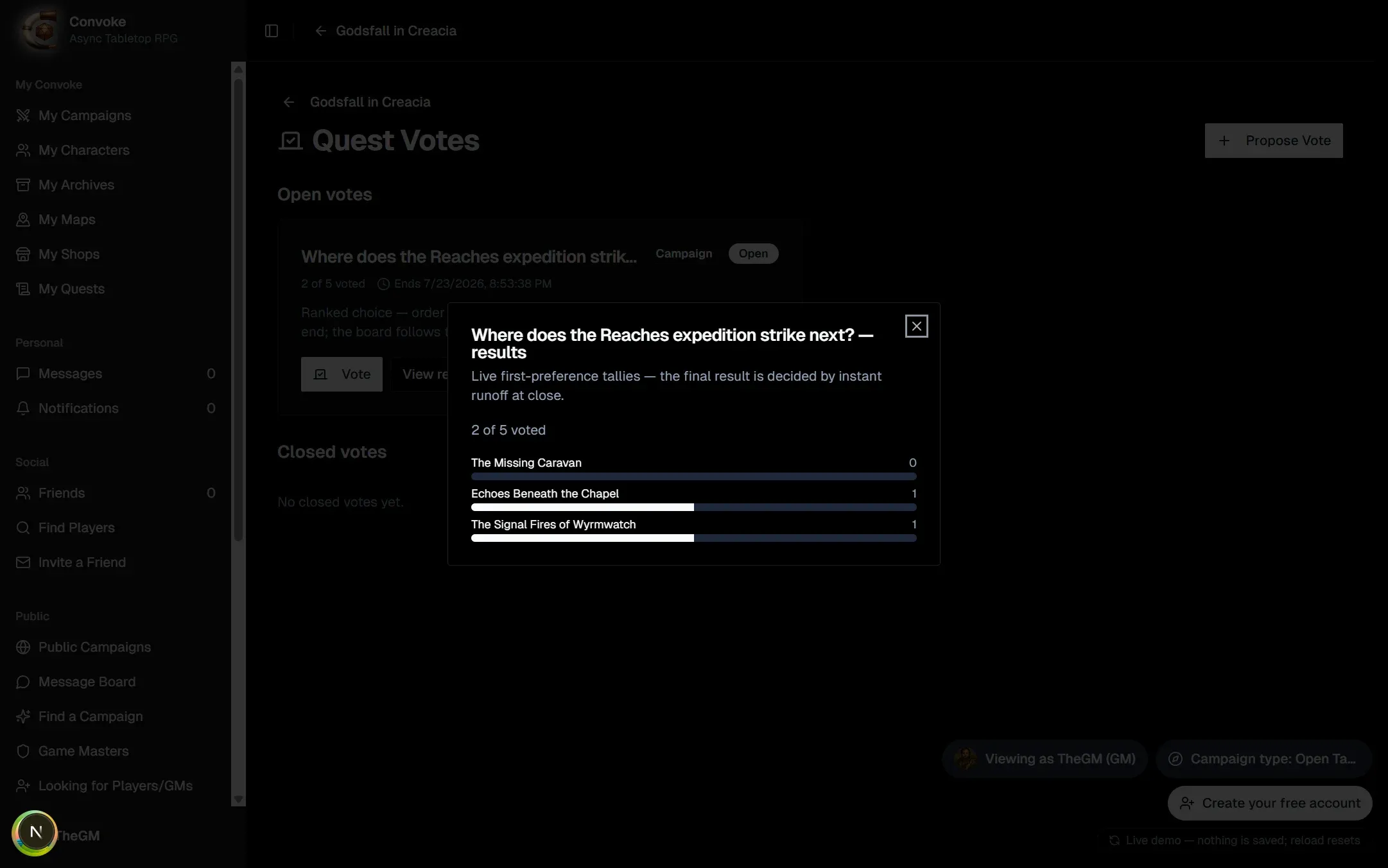
When a party cannot agree on what is next, they rank the options instead of arguing. Convoke runs a ranked-choice vote and dispatches the winning quest straight to the party — form a party, hold a vote, get dispatched.
- Ranked-choice (instant-runoff) quest voting
- The winning quest is dispatched to the voting party automatically
- No table debate, no GM tie-breaking
A standard campaign vs. an World Table world.
Both are first-class in Convoke. You choose which kind of campaign to run when you create it.
Players
Standard campaign
One fixed party
World Table world
Dozens, across many parties
Group structure
Standard campaign
The GM's roster
World Table world
Player-formed parties (join, leave, disband)
Running it
Standard campaign
Usually one GM
World Table world
A team of co-GMs with full parity
The map
Standard campaign
A reference image
World Table world
Knowledge-staged pins tied to real quests and shops
Choosing what is next
Standard campaign
The GM decides or the table debates
World Table world
A ranked-choice party vote that dispatches the quest
Between sessions
Standard campaign
The world waits for the group
World Table world
A persistent world that keeps moving
How to run one.
1. Create an World Table campaign
You choose World Table when you create the campaign, and set your world's player cap and party sizes. This is a world built for many hands from day one.
2. Players form parties
Players start their own parties or join existing ones — one party per character at a time. Each party gets its own channel to plan and play in, and your GMs can read them all.
3. Explore a living overworld
As parties push outward, the overworld map reveals pins in stages — hidden, rumored, then discovered — each tied to a real quest or shop waiting to be taken on.
4. Vote and get dispatched
When a party is split on where to go next, they hold a ranked-choice vote. The winning quest is dispatched straight to that party — no debate, no bottleneck.
5. Share the world with co-GMs
Bring on co-GMs with full, equal control. Everyone can author quests and shops, manage members, and keep the world moving — so no single person has to be online for the story to advance.
Who it is for.
- GMs who have always wanted to run a West Marches game but never had the tooling
- Big communities and servers who want one shared world instead of a dozen disconnected tables
- Co-GM teams who want to run a world together as equals
- Players who want a living world they can drop into for a session and shape over time
Build a world that never has to pause.
World Table campaigns are free in open beta, like everything else. Start one, or explore the demo world first.
In-World Economy
An economy your players can actually spend in.
GM-curated shops and quest boards live right inside your campaign. Players browse the stock, buy gear in a tap, and take on jobs for real rewards — while Convoke does the coin math, logs every purchase, and pays out quests automatically. No more tracking gold on a napkin.
No credit card. 5e today, more systems coming.
The problem
The bookkeeping nobody signed up for.
Somebody buys three healing potions and a mule. Now the GM is doing subtraction in their head, someone forgets to write it down, and two sessions later nobody agrees on how much gold the party has. The quest reward the party earned last month? Still unpaid, because tracking it was one more thing on the GM's list.
Convoke turns the in-world economy into something the platform handles for you — shops that do the coin math, and quests that pay themselves out — so the money in your world stays consistent without anyone keeping a ledger by hand.
Shops
Stock a shop. Players do the rest.
GM-curated shops, right in the campaign
Build a shop and stock it with real, materialized items — a general store, an armorer, an alchemist. You set what is on the shelves and what it costs. Players browse it inside the campaign, no external spreadsheet in sight.
- Curate the inventory item by item
- Prices are set by you, per shop
- Players browse the stock inside the campaign
Instant, server-checked purchases
A player taps Buy and the purchase settles instantly. Convoke checks that they can actually afford it, does the coin math, subtracts the cost, and drops the item into their inventory — all validated on the server, so the numbers are never wishful thinking.
- One-tap buying with automatic coin math
- The server validates every purchase against the buyer's coin
- The item lands in the character's inventory immediately
Temples and stables, not just gear
Shops are not only for potions and plate. Set up a temple that sells spellcasting services, or a stable that sells mounts. The services players expect from a living settlement are all part of the same system.
- Temple spellcasting services
- Mounts and other in-world services
Every purchase, on the record
Each purchase is written to a ledger and the GM is notified, so you always know what left the shelves and who bought it. The economy stays auditable without you having to watch it.
- A purchase ledger for every shop
- The GM is notified on each sale
Quests
Post the job. Convoke pays it out.
A quest board anyone can fill
Both GMs and players can author quests. Write the hook, list the objectives, set the reward, and post it to the board. The party has a living to-do list, and players can pitch their own jobs into the world.
- GM and player quest authoring
- Objectives, hooks, and rewards on every quest
- A shared board the whole party can see
Self-accept from the job board
Quests on the board can be picked up directly — a party sees an open job and takes it on. Assign a quest to a party, or let them accept it themselves. Either way, the work is claimed and tracked.
- Assign a quest to a party, or let them self-accept
- A job board that is never empty
Objective checklists the party ticks together
Each quest carries a checklist of objectives. As the party makes progress, objectives get ticked off — a single shared view of how close the group is to finishing the job.
- A shared objective checklist per quest
- Progress the whole party can see at a glance
Rewards that pay themselves out
Finish the quest and the reward lands automatically: XP is added to the party's characters, coin hits their purses, and any item rewards materialize straight into their inventories. No manual hand-outs, no forgotten loot.
- Automatic XP, coin, and item payouts on completion
- Item rewards materialize directly into inventory
- Nothing to hand out by hand
What the economy handles for you.
- The coin math on every purchase — checked on the server, never fudged
- A running ledger of what sold and who bought it
- Quest rewards paid out the moment the job is done
- Items that appear in inventory automatically — gear you bought, loot you earned
Who it is for.
- Play-by-post GMs, for whom this erases the single biggest chore: manual economy bookkeeping
- Any GM who wants shopping trips and downtime to happen without eating table time
- Players who want to actually spend the gold they earn
- World Table worlds, where shops and quest boards give dozens of players something to do
Give your world a working economy.
Shops and quest boards are free in open beta. Start a campaign, or browse them in the demo.
GM Marketplace
Get paid to run great games.
Any GM who completes payout onboarding can host paid sessions on Convoke. Set your own price per seat in your local currency, and players are charged when they book. Convoke holds the funds and releases them to you after the session runs — minus a low platform fee. You keep the rest.
No credit card. 5e today, more systems coming.
The opportunity
You already do the prep. Now it can pay.
You build the world, write the NPCs, and run the table. Plenty of players will happily pay to sit at a great GM's game — the friction has always been the plumbing: collecting money, holding it, handling cancellations and refunds, and doing it safely.
Convoke builds that plumbing in. Turn on paid sessions, set your price, and let the platform handle the money so you can focus on the game.
How you earn
You set the terms. Convoke handles the money.
Set your own per-seat price
You decide what a seat at your table is worth, priced in your local currency. Charge what your game is worth to you — there is no fixed rate handed down from the platform.
- Your price, per seat
- Priced in your local currency
Players pay when they book
A player reserves a seat and is charged at booking, so a confirmed seat is a paid seat. No chasing anyone for money after the fact, no "I'll bring it next time."
- Charged at booking, not at session start
- A booked seat is a paid seat
Paid out after the session runs
Convoke holds the funds while the game is on the calendar and releases them to you once the session completes. The money is secured up front and settled when the work is done.
- The platform holds funds until the session completes
- Funds released to you afterward, minus a low platform fee
Refunds before the cutoff
Plans change. Players who cancel before your cancellation cutoff are refunded automatically, so your table stays fair without you having to arbitrate.
- Automatic refunds before the cancellation cutoff
- Fewer no-show headaches
Open to any GM
Paid hosting is not locked behind a subscription tier. Any GM who completes payout onboarding can host paid sessions — new GMs and veterans alike.
- No subscription tier required
- Just complete payout onboarding
How a paid session flows.
1. Turn on paid sessions
Complete payout onboarding once. It is what lets Convoke pay you out safely, and it is open to any GM.
2. Price your seats
Set your per-seat price in your local currency, and open your session for booking.
3. Players book and pay
Each player who books a seat is charged at that moment, reserving their place at your table.
4. You run the game
Convoke holds the funds while the session is scheduled. Players who cancel before your cutoff are refunded automatically.
5. You get paid
After the session completes, the funds are released to you, minus a low platform fee. You keep the rest.
The details, up front.
- Convoke takes a low platform fee on paid sessions — you keep the rest.
- You are paid after the session completes, not before — the platform holds the funds in between.
- Players are charged when they book; cancel before your cutoff and they are refunded.
- Paid hosting is available in a growing list of supported countries, once you complete payout onboarding.
Who it is for.
- Experienced GMs who want to be paid for the prep they already do
- Pro and semi-pro GMs bringing their players onto a platform built for the whole campaign
- Anyone with a great campaign concept and open seats at the table
Turn your best campaigns into paid sessions.
Complete payout onboarding, set your price, and open your table.
VTT Mode
The battle map lives inside your story.
VTT Mode is a full virtual tabletop — tokens, fog of war, measurement, initiative, even opt-in 3D — built right into your campaign chat. It is async-first and mobile-first, so a turn on the battlefield is a post you make from your phone. Every move, reveal, and trigger becomes a line in the story. No separate app. No scheduling a night. No prep marathon.
No credit card. 5e today, more systems coming.
The problem
Every virtual tabletop assumes you are all at the table, right now.
The big VTTs are desktop apps built for a synchronous three-hour session. Roll20 publicly retired its mobile app in 2026 — "the current experience sucks," in their own words. Fantasy Grounds never shipped a tablet version. Foundry treats phones as a community-module workaround. The one genuinely mobile option does almost nothing.
And they all live outside your story. The map is one app, the chat is Discord, the notes are a third tab. When the session ends, the battle produces no record — just scrollback nobody reads. Setting a scene up means an hour of drawing walls and lighting a dungeon you might never fight in.
The single most common way a campaign dies is not a TPK. It is a group text that stops getting replies. A tabletop that only works when six adults are simultaneously free is a tabletop that mostly sits idle.
How it works.
1. Enter VTT Mode from any scene
A "VTT Mode" button sits on your campaign maps and scenario play view. Tap it and the map takes center stage while your campaign chat docks to a rail on the right — a bottom sheet on your phone. The story never leaves the screen. Leave any time; nothing is disrupted.
2. Move tokens; the map narrates itself
Drag character and NPC tokens across the grid or an uploaded battle map. Tokens are your actual characters — no "default token" linking ritual. Moves sync live to everyone, and when a token crosses into a new room, a quiet line lands in the chat: "Kira moved to the Hall of Whispering Bones." Your session writes its own log.
3. Reveal the world one room at a time
Fog of war hides what the party has not explored. One tap reveals a whole room — no drawing walls, no lighting engine, no "why is my screen black" support thread. Players see only what is revealed; the GM sees everything with a one-tap "preview as a player." Every reveal becomes a story beat.
4. Measure, template, ping, and roll for initiative
A ruler, D&D area templates (circle, cone, line), and pings for "look here" are all one tap away. When combat starts, an initiative ribbon rides along the top of the map, and the whole encounter runs turn by turn.
5. Take your turn as a post
This is the part no other VTT has. During combat you move your token — it saves instantly — and write what your character does in chat, on your own time. The GM passes the turn to the next combatant, and a deadline plus a gentle nudge keep the fight moving even when nobody is online at the same time. Async combat, on a real battle map.
6. Tilt into 3D (optional)
Flip one switch and your hand-drawn map rises into a tiltable 3D diorama — the same artwork, walls extruded, tokens standing on the field. It is opt-in per map, degrades gracefully on weaker devices, and never gets in the way of the 2D game.
What makes it different.
- Turn-by-post combat — stage a move, post your turn, and end it as one atomic action. No incumbent VTT does async combat on a map.
- The map is inside the story — every token move, fog reveal, and map trigger is a durable event in your campaign chat, not ephemeral canvas state.
- Truly mobile-first — move tokens, reveal fog, and take your turn from a phone. The market leaders conceded mobile; this was built for it.
- Zero-prep maps — generate a map from a text prompt or an image, or upload your own. Room-based fog means no walls to draw. No lighting to configure.
- Character-first tokens — a token IS your character or NPC. No default-token linking, no re-importing art.
- Opt-in 3D that keeps the art — the same hand-drawn map, tilted, with extruded walls. Not a separate desktop-only game.
- Works on any device, always on — no self-hosting, no port forwarding, no paid server to keep your world reachable between sessions.
Who it is for.
- Play-by-post groups — finally a battle map that advances one post at a time, instead of a Discord channel full of "I move 30 feet north."
- Hybrid groups — run the fight live at the table, then let players finish their turns from the couch during the week.
- Mobile players — the person on the train, on lunch, on the couch. A full turn from a phone, not a read-only sheet.
- GMs tired of prep — generate or upload a map, tap to reveal rooms, and start playing in minutes instead of hours.
Bring the battle map to where your campaign actually lives.